What is AI SEO? A Complete Guide on Generative Engine Optimization
Bassem is a digital marketing, SEO, and AI strategist with more than 22+ years of experience managing online marketing strategies for some of Canada's and international corporations, including Canadian Tire, VistaPrint, Remax Canada, Egypt Air, Xplornet, Direct Energy, and Toronto Star.
Key Takeaway: AI SEO helps your business become visible where modern buying decisions are made. By combining technical SEO, authoritative content, structured data, and strong brand signals, you increase your chances of being retrieved, cited, and recommended by AI platforms like Google AI Overviews, ChatGPT, Gemini, and Claude.
Ranking on Google is no longer enough to guarantee visibility. As more people use Google AI Overviews, ChatGPT, Gemini, and Claude to research suppliers, contractors, and services, traditional search habits are breaking down. We have officially entered the zero-click reality. Today, between 58% and 68% of Google searches end without a single click to a website because users get their answers directly from AI-generated summaries.
As I tell our clients constantly: it’s officially AI or DIE.
If your business is not optimized for AI retrieval, you are becoming invisible to a massive segment of your market, even if your traditional keyword rankings look healthy.
Thankfully, most of the fundamentals that helped you rank on Google still matter, but AI platforms expect much more before they recommend your business. They evaluate your authority across the web, your entity relationships, your structured data, your reputation, and whether multiple trusted sources consistently validate your expertise.
Businesses that adapt will gain a disproportionate share of AI visibility. Those that do not will gradually disappear from the conversations that influence buying decisions. That is exactly what AI SEO is designed to solve.
What is AI SEO?
AI SEO is the process of optimizing your website and digital footprint to maximize visibility within AI-powered search engines, large language models, and conversational answer engines.
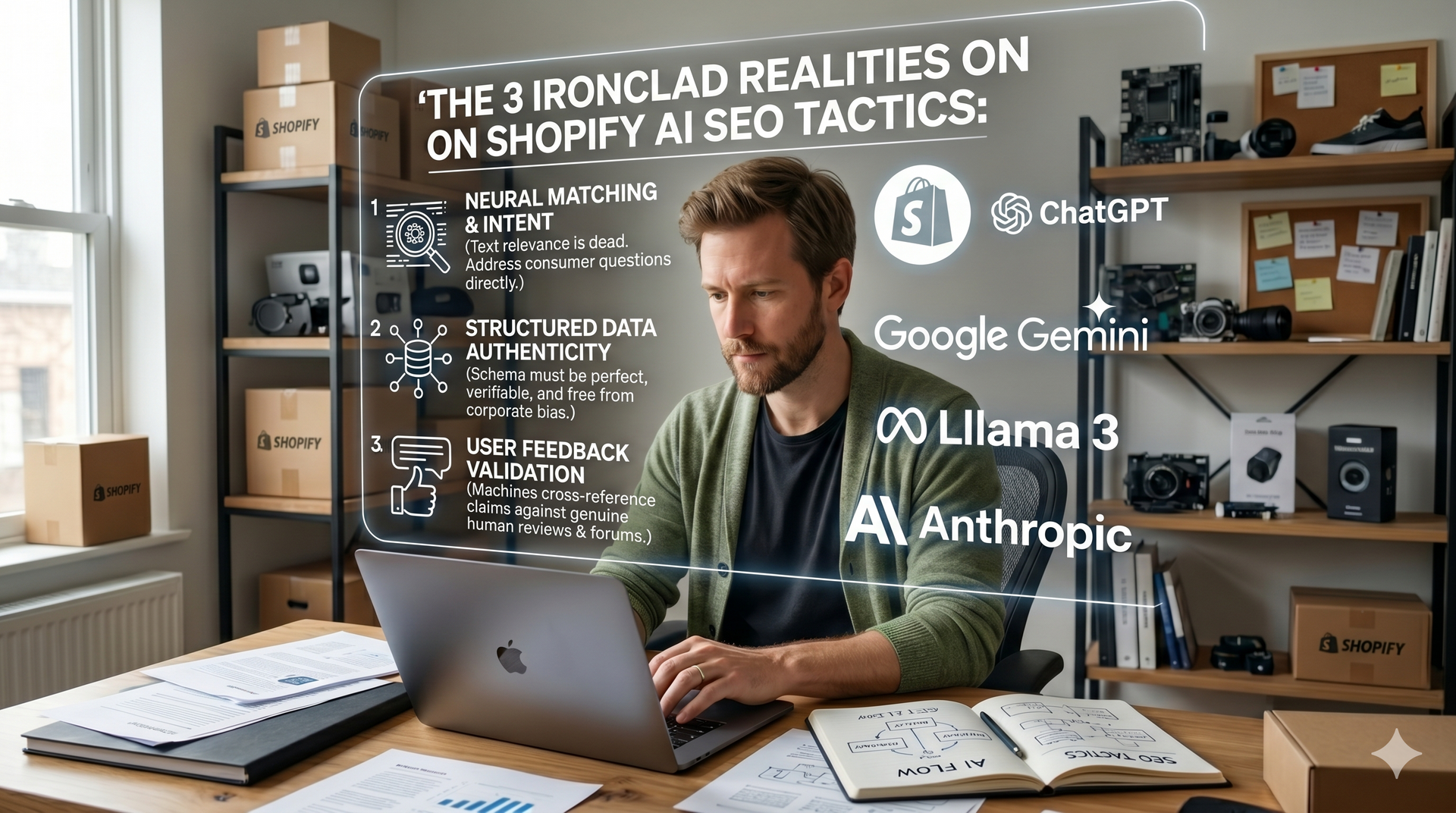
Unlike traditional SEO, which focuses on matching specific keywords to rank higher on a standard results page, AI SEO focuses on semantic meaning, context, and brand trust. AI search tools do not just scan for words; they synthesize information from across the web to answer multi-layered user prompts.
For instance, a buyer will rarely just search "HVAC commercial contractor." Instead, they will type into an AI assistant: "Find me a commercial HVAC contractor in New York with experience in cleanroom installations and a reputation for fast response times."
AI SEO ensures that when a model processes that prompt, your business is the one it synthesizes into the final answer.
The process looks like this:
High-Quality Context → Large Language Model Parsing → Trust & Entity Verification → AI Synthesis → Retrieval & Recommendation
This means that you need to stop writing just for keyword algorithms. You need to build a comprehensive web of information that gives AI systems high confidence in your capabilities. When an AI engine is confident in your data, it references your brand.
Learn More About AI SEO





How AI Search Engines Retrieve Information
AI search engines retrieve information by evaluating the relationships between concepts, scanning structured data, and measuring the real-world credibility of a brand across multiple external sources. Instead of treating webpages as isolated text documents, they treat your business as a distinct entity within a broader industry network.
AI search engines retrieve information differently from traditional search engines. Instead of simply matching keywords to webpages, they try to understand a user's question and generate the best possible answer. To do that, they evaluate much more than the content on a single page.
They Understand Topics, Not Just Keywords
AI recognizes the relationships between words, topics, and concepts. This allows it to answer questions even when the exact keywords are not used on a page.
They Verify Information Across the Web
AI compares information from multiple sources before including it in an answer. These sources may include:
- Your website
- Business directories
- Review platforms
- News articles
- Industry publications
- Social profiles
The more consistent your information is across these sources, the more confidence AI has in your business.
They Measure Brand Credibility
AI also evaluates whether your business appears to be a trusted authority. Some of the signals it looks for include:
- Mentions from reputable websites
- Positive reviews
- Backlinks from trusted sources
- Expert content
- Awards and industry recognition
The stronger your overall digital presence, the more likely AI is to retrieve and recommend your business when it answers a user's question.
AI SEO vs Traditional SEO
The difference is clear: traditional SEO optimizes for search engine crawlers looking for keywords, while AI SEO optimizes for information engines looking for comprehensive answers and proof.
| Traditional Keyword SEO | AI SEO & Generative Optimization |
|---|---|
| Focuses on individual search phrases | Focuses on user intent and multi-step prompts |
| Optimizes individual pages | Optimizes the entire digital footprint |
| Measures success via keyword positions | Measures success via AI citations and recommendations |
| Targets clicks to a specific webpage | Targets presence in AI summaries and direct answers |
| Relies heavily on exact-match text | Relies on structured data and entity relationships |
AI SEO does not replace traditional SEO. The two work together. High-quality organic optimization provides the foundational visibility that AI models use to discover your business in the first place.
The Ecosystem of AI Search Visibility
AI SEO is not a single optimization tactic. It is a collection of complementary disciplines that help AI systems understand your business, evaluate your credibility, and recommend your brand. While each discipline serves a different purpose, they work together to improve your visibility across Google AI Overviews, ChatGPT, Gemini, Claude, Perplexity, and other AI-powered search experiences.
AI SEO and Entity SEO
Entity SEO focuses on building a clear digital identity for your business. It helps AI systems understand who you are, what you do, and how your brand relates to other companies, products, services, and topics across the web.
Strong entity signals reduce ambiguity and make it easier for AI to retrieve and recommend your business with confidence.
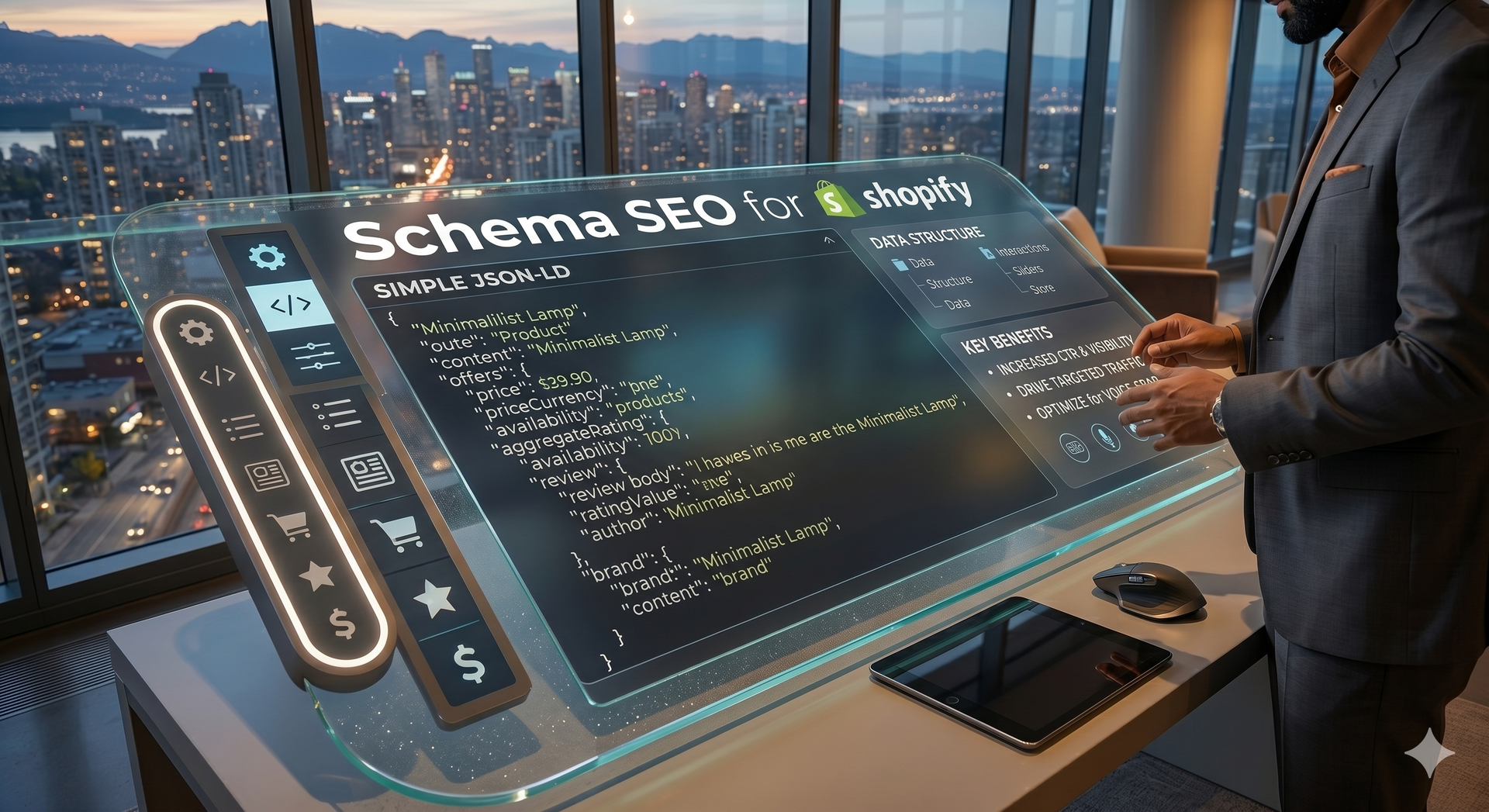
AI SEO and Schema SEO
Schema SEO adds structured data to your website so search engines and AI platforms can interpret your content more accurately. It helps identify important information such as your organization, products, services, authors, FAQs, reviews, and locations.
While users rarely see Schema markup, it provides valuable context that helps machines understand your website more efficiently.
AI SEO and Answer Engine Optimization (AEO)
Answer Engine Optimization (AEO) focuses on helping your content appear in direct answers instead of traditional search results. This includes AI-generated responses, featured snippets, and voice assistants.
AEO encourages content that answers customer questions clearly, directly, and in a format that AI systems can easily extract and present.
AI SEO and Generative Engine Optimization (GEO)
Generative Engine Optimization (GEO) focuses on increasing your visibility within AI-generated responses. Rather than simply helping a page rank, GEO helps your content become part of the answer that AI delivers to users.
It emphasizes creating authoritative, well-structured content that AI systems can confidently retrieve and cite.
AI SEO and Large Language Model Optimization (LLMO)
Large Language Model Optimization (LLMO) focuses on improving how language models understand your brand and associate it with specific topics and areas of expertise.
This is achieved by building consistent information across your website and other trusted sources, making it easier for AI models to recognize your business as an authority when answering relevant questions.
AI SEO and Agentic AI
AI is rapidly evolving from answering questions to completing tasks. The next generation of AI agents will compare vendors, evaluate products, book appointments, request proposals, and even make purchasing decisions with minimal human involvement.
AI SEO prepares your business for this shift by ensuring your information is clear, accurate, and easy for autonomous AI systems to understand. Businesses that optimize early will be in a stronger position as AI agents become a larger part of the buying journey.
The Green Lotus Framework for AI Search Dominance
At Green Lotus, we know you do not win the future of search by simply chasing algorithms. You win by building a digital presence that AI platforms can easily parse, trust, and present to buyers.
1. Structure the Data
AI systems need structured, unambiguous data to understand your business without guesswork. We implement advanced Schema markup—including Organization, Product, LocalBusiness, and SameAs properties—to explicitly tell search engines who you are, what you sell, and where you operate. This structural clarity reduces ambiguity and makes your data highly retrievable.
2. Demonstrate Authority Through Experience
AI models favor content that demonstrates real-world experience and expertise. We help our clients build topical authority by creating comprehensive content clusters that cover every nuance of their specialization. We do not just say a client is an expert; we showcase their case studies, technical certifications, and industry partnerships so AI platforms have the evidence they need to recommend them.
3. Monitor and Expand AI Citations
Winning in AI search means tracking where your brand appears in LLM responses. We analyze how engines like ChatGPT and Google AI Overviews cite our clients, identifying gaps where competitors are being recommended instead. By earning high-quality mentions on authoritative industry websites, we systematically insert our clients into the datasets that AI models trust most.
The results of this approach speak for themselves. We worked with Visca Electric, a local service provider, and helped them gain 6 new keyword rankings specifically on Google AI Overviews within just two months of upgrading their digital strategy. Another client, Neuropotential Clinics, gained 23 new Google AI Overview rankings in a single month.
AI search is not a future concept; it is happening right now, and it drives real business outcomes.
How to Measure Success in the AI Era
Evaluating AI SEO requires looking past traditional ranking reports. While organic traffic remains important, you must track how effectively your business is being retrieved by generative models.
| Metric | What It Tells You |
|---|---|
| Branded Search Volume | More people are searching specifically for your business. |
| Knowledge Panel Visibility | Google has strong confidence in your entity. |
| AI Citations & AI Overview Visibility | AI systems are retrieving your content as a trusted source. |
| AI Recommendations | Your business is being recognised as an authority within your industry. |
| Share of Voice | You're becoming more visible across your core topics. |
| Organic Conversions | Recognition is turning into qualified leads and revenue. |
AI SEO is ultimately about earning trust, not just traffic. The businesses that win over the next decade will not necessarily be those with the most website visits. They will be the ones that AI platforms consistently retrieve, cite, and recommend. By tracking these metrics together, you can measure whether your brand is becoming the trusted source that both customers and AI systems choose first.
How AI SEO Services Prepare Your Business for the Future of Search
Search has evolved from a tool that finds documents into an engine that answers questions and guides buying decisions. Google AI Overviews, ChatGPT, and other advanced platforms are becoming the primary gatekeepers between mid-market businesses and their customers. Companies that organize their digital footprints around clarity, structure, and verified authority will secure a lasting competitive advantage, while those relying on outdated keyword strategies will see their visibility erode.
This transition represents an incredible growth opportunity for forward-thinking business owners. Every piece of structured data you implement, every authoritative case study you publish, and every trusted industry mention you earn strengthens your position within the AI ecosystems. These optimization efforts compound over time, making your company increasingly indispensable to the models that buyers trust.
At Green Lotus Digital Marketing Agency, we specialize in helping mid-market companies navigate this shift. Our team integrates technical SEO, Schema architecture, and Generative Engine Optimization into a clear strategy designed to maximize your visibility across both traditional search engines and AI platforms.
If you want to ensure your business is actively recommended by AI search engines rather than left out of the conversation, let's talk. Book a strategy call with our team today, and let's build an AI SEO plan that protects and grows your market share
Frequently Asked Questions
Will traditional SEO completely disappear because of AI?
No. Traditional SEO is not disappearing; it is evolving. AI search engines rely on the open web and traditional organic indexes to discover information. High-quality content and standard technical optimization remain necessary, but they must now be augmented with data structures that AI engines can easily synthesize.
How long does it take to see results from AI SEO?
Visible changes can happen relatively quickly depending on your existing site authority. For example, some Green Lotus clients have secured new Google AI Overview rankings within one to two months of updating their site architecture. However, building comprehensive authority across multiple LLMs is an ongoing strategic process.
Do I need to use AI writing tools to rank well in AI search?
No. In fact, relying solely on generic, automated text can hurt your visibility. AI search engines value unique data, real-world case studies, and distinct expert perspectives. The goal is to create highly informative, human-centric content that provides clear answers, not to flood the web with repetitive paragraphs.
What is the quickest way to make my website friendlier to AI engines?
The fastest step is implementing comprehensive, error-free Schema markup across your entire site. This gives AI engines a transparent, machine-readable map of your organization, location, products, and team, removing the guesswork from how they index your business.