
Sponsoring Your ChatGPT Agent Is a Trap
Bassem is a 2-time winner of the Canadian Entrepreneur of the Year award and a digital marketing, SEO, and AI strategist with 22+ years of experience managing online marketing strategies for some of Canada's largest companies and international brands, including Canadian Tire, VistaPrint, Remax Canada, Xplornet, Direct Energy, and Toronto Star.
Key Takeaway: Sponsoring a ChatGPT Business Agent can help ecommerce brands reach more customers, but paid visibility should come last. Start with fast customer support, accurate Shopify product information, and AI SEO that helps your brand earn organic recommendations. Once those foundations are working, sponsored agents can amplify results instead of exposing gaps at your expense.
On November 10, OpenAI introduced Businesses in ChatGPT in beta. Businesses can claim their profile, manage their information, see aggregated insights on mentions and website clicks, and, if they’re eligible, build a Business Agent that answers customer questions inside ChatGPT. OpenAI says it’s open now to eligible ecommerce and online service businesses in the U.S., and that ChatGPT reaches 1.2 billion people a week.
A ChatGPT Business Agent is a clearly labeled conversation that a customer can start from a business’s ChatGPT profile, where an agent answers questions using the business’s own information. It’s separate from the customer’s original ChatGPT chat and from ChatGPT’s independent answers.
Then comes the line that matters most to me. Businesses can sponsor that agent and “use it as the destination for ChatGPT Ads.” Sponsored placements are labeled and kept separate from ChatGPT’s own answers.
I believe that’s a trap for most ecommerce brands. Not because the product is bad. It could turn out to be very good. It’s a trap because it’s the easiest possible place to spend money before you’re ready.
The Ad Is The Easy Part. The Answer Is Where You Win Or Lose
Anyone can write an ad and set a budget. That’s why platforms love to sell them first. A campaign takes an afternoon to launch, and the dashboard starts filling with impressions before lunch. It feels like progress.
What happens after the tap is the hard part. The agent can only work from the information your brand gives it: prices, policies, availability, shipping details. If your shipping rules live in a PDF nobody updated, or your product pages repeat the manufacturer’s copy, or your return policy changed last year and the website still shows the old one, the agent has nothing sharp to say. It can’t improvise its way past a gap the brand never filled.
A salesperson can bluff for a minute and recover with charm. An agent working from thin information can’t. It either gives a vague answer or a wrong one, and the customer is comparing you with someone else in the next tab.
Think about the old model. An ad sent someone to a page, and the page did the talking, so a weak page cost you a bounce. A sponsored agent changes the economics. Every question is a live test of your brand, and every vague answer is a sale you paid for the chance to lose. That pushes up your cost per acquisition and eats the margin on every order you do win.
OpenAI Is Selling The Last Step Of A Journey You Haven’t Started
Look at the path OpenAI laid out. Claim your profile. Build a Business Agent. Sponsor it. It’s logical, it’s well designed, and it ends at a payment.
I understand why. It’s a good business for OpenAI, and the early steps are genuinely useful. Claiming your profile and keeping your information current is something I’d do. Insights on how people engage with you are worth having.
But a path that ends at a payment isn’t the same thing as a strategy. The real prize sits earlier in the journey, in whether ChatGPT brings your brand into the answer on its own when someone asks who to buy from.
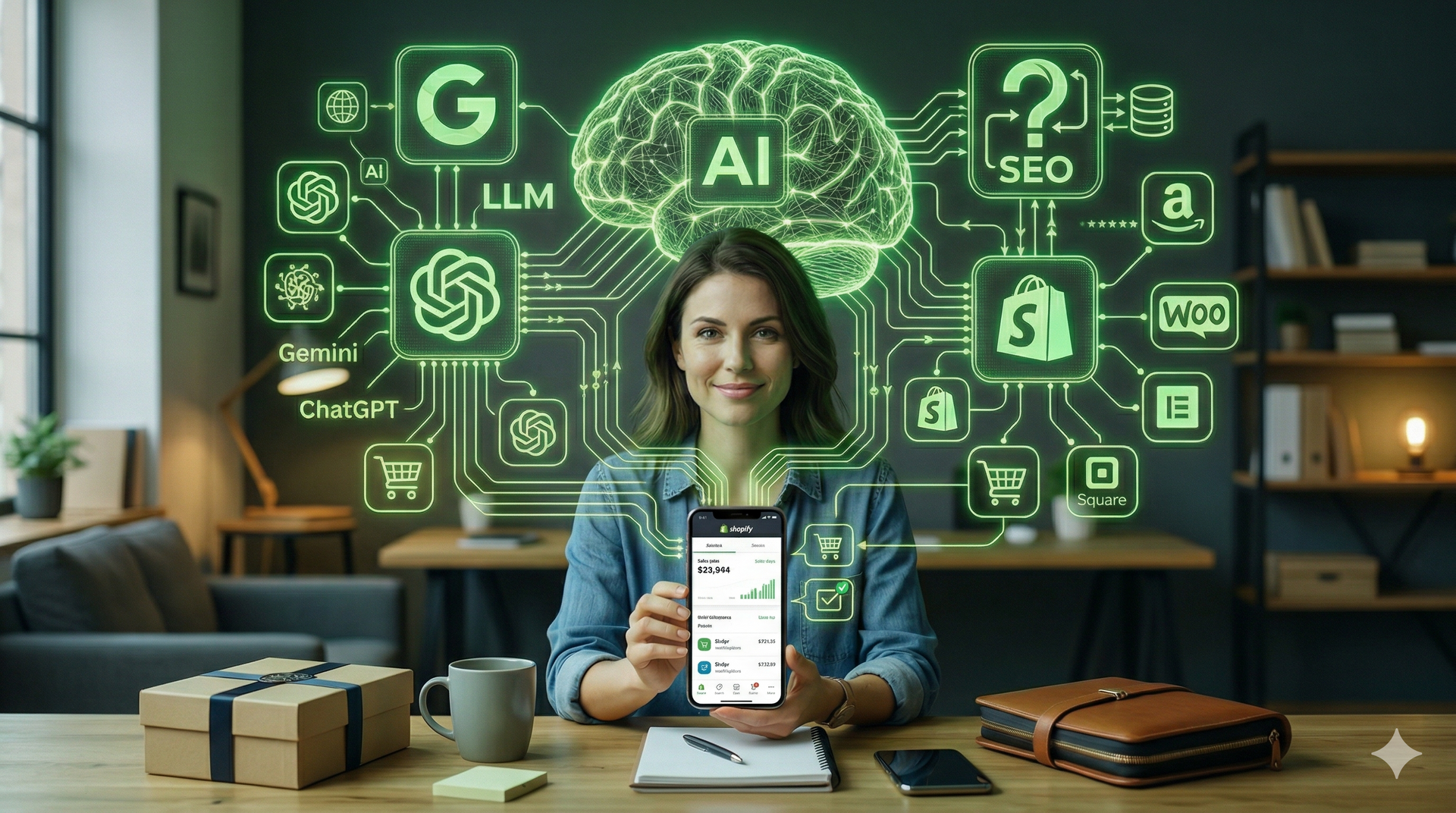
In June I wrote that ChatGPT Ads shouldn’t be your first AI investment. This announcement makes me more convinced, not less. Ads buy attention. AI SEO for Shopify builds an asset that keeps working.
We’ve seen what that looks like in the numbers. From 2022 to 2025, Green Lotus grew the organic search traffic of Canadian Med Health Supplies, a Canadian client, 4.61 times. Every one of those visits came from Google’s free results, so each arrived without a cost per click.
Organic visibility takes months to build, and I expect it to lower the cost of every sale after that.
The Order I’d Follow Before Spending A Dollar
Here’s the order I’d follow, and why each step comes before the next:
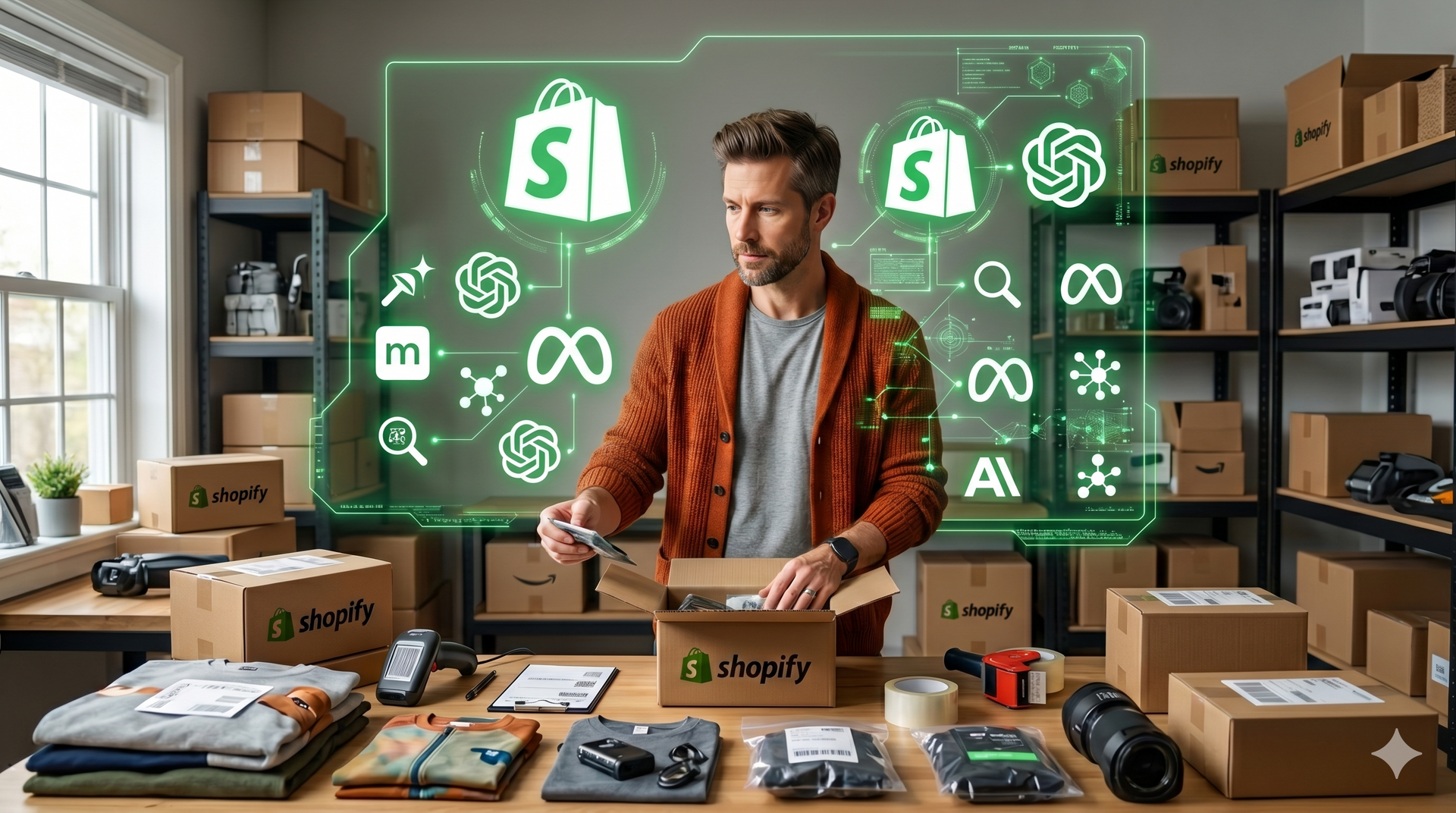
Answer every order and product question in seconds. Start on the channels you own: your store, your email and your texts. A Business Agent only lives inside ChatGPT. Most of your customers will still arrive from somewhere else, from search, from referrals, from a friend’s recommendation, and they won’t wait around for a reply. If you can’t answer fast on your own channels, I wouldn’t pay to start more conversations anywhere.
Build the foundation. This is where accurate prices, clear policies and structured information live. Every AI system depends on that information, including your future agent, which is only as good as the source it reads from.
Become the brand AI recommends. This is the long game, and it’s the part that compounds. The work you do to make your brand clear and trustworthy to machines also makes it clearer to people, so AI can start recommending you without being paid to. Our AI SEO for Shopify stores starts here.
Amplify what already works. After those three are working, sponsoring an agent makes sense. You’ll know the agent can answer, you’ll know the information behind it is right, and you’ll already have some organic visibility to build on. At that point you’re amplifying something that works instead of paying to find out what doesn’t.
That’s the order. Agentic AI. Shopify. AI SEO. Ads last. Skipping steps doesn’t save time. It moves the learning to the most expensive place.
Audit What Your AI Agent Will Read Before It Meets A Customer
Before you sponsor anything, check the four things customers ask about first:
- Prices: Does every price, sale price, bundle and variant on your site match what the agent would quote?
- Policies: Are returns, exchanges, warranties and cancellations written in plain language, on a page the agent can read, and are they current?
- Shipping: Are costs, delivery times, order cutoffs and exceptions stated clearly?
- Service area: Does your site say exactly where you ship and sell, and where you don’t?
If a new hire couldn’t answer a question from your website alone, don’t expect the agent to.
The Trap Closes On Brands That Don’t Put First Things First
OpenAI plans to bring Business Agents to more markets and categories, so this is only the beginning. The format will get better, and the rules will keep changing.
I want to be fair about that. Some sponsored agents will perform very well, and we’ll test them ourselves. What matters is that putting first things first counts for more than how early you start spending.
The winners will be the brands that did the unglamorous work first. They answer fast everywhere customers reach them. Their websites speak clearly to people and to machines. AI already understands who they are, so the agent has something real to say.
The losers will be the ones that sponsor first and sort out the basics later. A thin answer lands in front of a paying customer, and they decide AI advertising doesn’t work. It will have worked exactly as designed. The brand just hadn’t done the groundwork.
Common Questions About Sponsoring A ChatGPT Business Agent
Should I sponsor my ChatGPT Business Agent?
Not first. Sponsor it once you can answer customers fast on your own channels, your store holds accurate prices and policies, and AI SEO is working. Sponsoring earlier means paying to find out what’s broken, and that raises your cost per acquisition.
Can I read my Business Agent’s chats?
OpenAI says it doesn’t share users’ conversations or Business Agent chats with businesses. You get aggregated insights, and only when there are enough conversations or interactions to meet certain thresholds.
Who can build a ChatGPT Business Agent right now?
Eligible ecommerce and online service businesses in the U.S., after they claim their business in ChatGPT. OpenAI plans to expand to more markets and business categories.