What is Entity SEO? A Complete Guide on Building Machine-Readable Entities
Bassem is a digital marketing, SEO, and AI strategist with more than 22+ years of experience managing online marketing strategies for some of Canada's and international corporations, including Canadian Tire, VistaPrint, Remax Canada, Egypt Air, Xplornet, Direct Energy, and Toronto Star.
Key Takeaway: Businesses that consistently demonstrate expertise, build trust, and create a clear digital identity will have a growing advantage as search shifts from rankings to retrieval, recommendations, and AI-driven buying decisions.
Your customers may understand your content. The real question is whether AI understands it, too.
As more people turn to Google AI Overviews, ChatGPT, Gemini, and other AI-powered search tools to research businesses, it's no longer enough to create content that humans understand. Your business also needs to be something machines can confidently identify, trust, and recommend.
We've officially entered the zero-click era. Today, between 58% and 68% of Google searches end without a single website visit because users get their answers directly from AI Overviews, featured snippets, and other AI-powered search experiences. As I’ve been saying: it’s officially AI or DIE.
If AI doesn't understand who you are, what you do, and why you're credible, you're becoming harder to discover, even if your SEO looks healthy.
That's where Entity SEO comes in. It's the strategy that helps search engines and AI systems recognize your business as a trusted entity, improving your visibility across both traditional search and the rapidly growing world of AI search.
What is Entity SEO?
Entity SEO is the process of helping search engines and AI systems clearly identify, understand, and trust your business.
An entity is anything that is uniquely identifiable. That includes:
- Businesses
- People
- Products
- Locations
- Organisations
- Events
- Brands
- Concepts
Unlike keywords, entities have meaning. Search engines don't simply match words on a page. Instead, they try to understand what those words represent and how they relate to one another. That's important because the same keyword can refer to completely different entities depending on the context.
Take the word "Jaguar." Without additional context, Google can't determine whether you're referring to the following:
- Jaguar, the animal
- Jaguar, the luxury car manufacturer,
- Jaguar, the software
- Jacksonville Jaguars, the NFL team
By analysing the surrounding entities and the relationships between them, Google can accurately identify which "Jaguar" you're talking about.
This is why Entity SEO focuses on context rather than keyword repetition. The more clearly your content connects your business to relevant products, services, industries, people, and concepts, the easier it is for search engines to understand your expertise.
The process looks something like this:
Content → Entity Recognition → Relationship Analysis → Knowledge Graph → Search & AI Retrieval
For businesses, better context creates greater confidence. And when search engines are more confident about who you are and what you do, they're far more likely to retrieve, rank, and recommend your business.
Learn More About Entity SEO


How Search Engines Understand Entities
Search engines understand entities by identifying who or what something is, separating it from similar concepts, and connecting it to related people, places, products, organizations, and topics. They do this by combining technologies like the Knowledge Graph, Natural Language Processing (NLP), and structured data to understand meaning instead of simply matching keywords.
What Is Google's Knowledge Graph?
Google's Knowledge Graph is a massive database of entities and the relationships between them.
Rather than storing isolated webpages, Google builds a connected understanding of businesses, people, products, industries, locations, and concepts. For a manufacturing company, that means understanding far more than your company name.
For example, a precision machining manufacturer may be connected to:
- CNC machining services
- Aerospace and automotive industries
- ISO 9001 or AS9100 certifications
- Manufacturing capabilities and equipment
- Materials such as aluminium, stainless steel, and titanium
- Facility locations
- Key leadership and engineers
- Industry associations
- Customers, partners, and suppliers
- Website and social profiles
The more consistently these relationships appear across your website and trusted third-party sources, the more confidence Google has in understanding your business. That confidence makes it easier for search engines and AI systems to retrieve and recommend your company when buyers are looking for a manufacturer with your capabilities.
How NLP Identifies Entities
Natural Language Processing (NLP) is the technology that allows Google to read content more like a human than a machine. Instead of simply matching keywords, it identifies the people, companies, products, industries, and concepts mentioned on a page—and understands how they're related.
For example, imagine a manufacturer publishes an article about:
- CNC machining
- Aerospace components
- Titanium
- AS9100 certification
- Five-axis machining
Even if the phrase "aerospace CNC machining company" only appears once—or not at all—Google can recognise that these entities are closely connected. Over time, that helps Google understand not just what the page is about, but what the business specializes in.
That's why modern SEO is less about repeating keywords and more about creating content that clearly demonstrates your expertise, capabilities, and relationships within your industry.
Entity SEO vs Traditional Keyword SEO
The difference is simple: keyword SEO optimizes content, while Entity SEO optimizes understanding. Traditional SEO aims to improve rankings for individual search terms. Entity SEO aims to build enough trust and context that search engines and AI systems confidently recognize, retrieve, and recommend your business.
| Traditional Keyword SEO | Entity SEO |
|---|---|
| Optimises content for search engines | Optimises businesses for search engines and AI systems |
| Targets phrases | Builds concepts |
| Focuses on rankings | Focuses on recognition |
| Measures keyword positions | Measures authority |
| Earns clicks | Earns retrieval and recommendations |
| Individual pages compete | Entire brand becomes authoritative |
Don’t get me wrong. Entity SEO doesn't replace traditional SEO. Keywords still help search engines understand the content of individual pages, while entities help them understand your business as a whole.
Why Entity SEO Improves AI Search Visibility
Entity SEO doesn't just improve how search engines understand your business. It strengthens every AI optimization strategy built on top of it. The more clearly AI understands who you are, what you do, and why you're credible, the more likely your business is to be retrieved, cited, and recommended across AI-powered search experiences.
Entity SEO and AI SEO
AI SEO focuses on helping businesses become more visible across AI-powered search experiences like Google AI Overviews, ChatGPT, Gemini, and Claude. While traditional SEO optimizes for rankings, AI SEO optimizes for retrieval and recommendations.
Entity SEO provides the foundation by helping AI understand who your business is, what it does, and why it's credible. Without strong entity signals, AI has far less confidence in recommending your business.
Entity SEO and Schema SEO
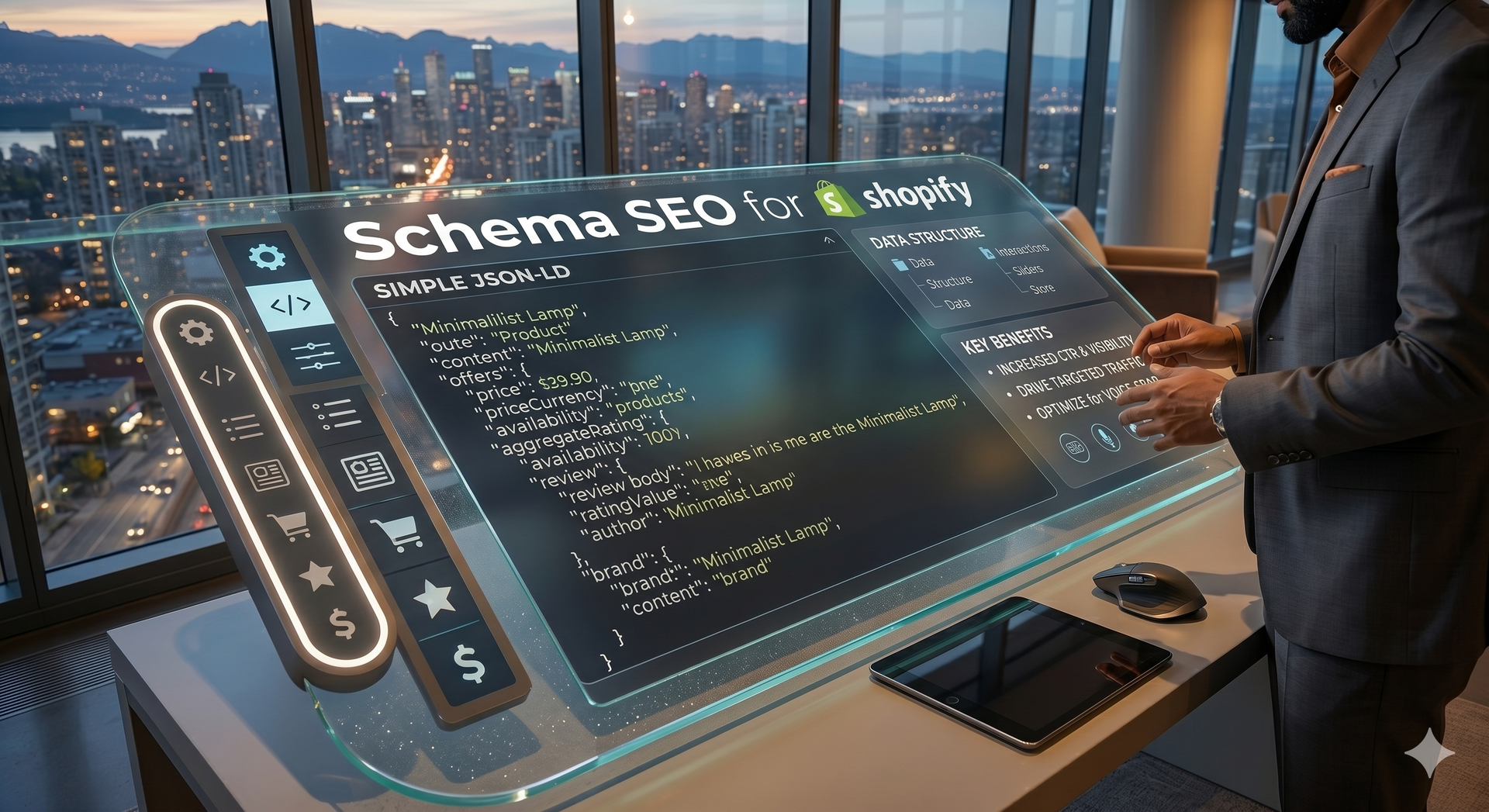
Entity SEO and Schema SEO work together, but they serve different purposes. Entity SEO builds your business's digital identity, while Schema SEO communicates that identity in a structured, machine-readable format.
Think of Entity SEO as defining who you are and Schema SEO as giving search engines the data they need to verify it. Together, they reduce ambiguity and strengthen AI understanding
| Schema Type | Purpose |
|---|---|
| Organization | Identifies your company |
| Person | Establishes author credibility |
| Product | Defines products and services |
| FAQ | Clarifies customer questions |
| Review | Reinforces trust signals |
| LocalBusiness | Strengthens local entity recognition |
One particularly important property is SameAs, which connects your website with trusted profiles such as LinkedIn, Google Business Profile, Wikidata, and social platforms.
Those connections help search engines confirm that multiple references describe the same entity.
Entity SEO and Answer Engine Optimization (AEO)
Answer Engine Optimization (AEO) focuses on helping your content appear in direct answers rather than traditional search results. To generate reliable answers, AI systems need confidence in both the information and its source.
Strong entity signals increase that confidence, making your business more likely to be cited when users ask AI questions related to your expertise.
Entity SEO and Generative Engine Optimization (GEO)
Generative Engine Optimization (GEO) improves your visibility within AI-generated responses across platforms like Google AI Overviews, ChatGPT, and Perplexity.
Entity SEO supports GEO by making your business easier for AI systems to identify, understand, and retrieve. The stronger your entity, the more likely your business is to be included in AI-generated recommendations.
Entity SEO and Large Language Model Optimization (LLMO)
Large Language Model Optimization (LLMO) focuses on improving how models like ChatGPT, Claude, and Gemini understand and reference your business.
Entity SEO strengthens LLMO by creating consistent relationships between your business, your expertise, and trusted sources across the web. Those signals make it easier for language models to recognise your brand as an authority.
Entity SEO and Agentic AI
We're moving toward a world where AI doesn't just answer questions—it makes decisions.
Before long, AI agents will be comparing suppliers, shortlisting vendors, booking appointments, and initiating purchases with little or no human involvement. If those systems don't understand and trust your business as an entity, you won't make the shortlist. Entity SEO helps ensure you're visible not only to today's customers, but to tomorrow's AI buyers.
The Green Lotus Framework For Building Semantic Authority
At Green Lotus, we believe businesses don't win AI search by publishing more content. They win by becoming businesses that AI can clearly understand, confidently trust, and consistently recommend.
Everything we do—from Entity SEO and Schema SEO to AI SEO, Answer Engine Optimization (AEO), Generative Engine Optimization (GEO), Large Language Model Optimization (LLMO), and Agentic AI—is built on that philosophy.
1. Be Understood
Before AI can recommend your business, it first has to understand it. That sounds obvious, but it's where many businesses fall short. Search engines and AI systems don't form an opinion based on a single webpage. They build an understanding of your business by connecting information from your website, Google Business Profile, Schema Markup, social profiles, industry directories, review platforms, and other trusted sources across the web.
If those sources tell a consistent story, AI gains confidence in who you are, what you do, and the industries you serve. If they contradict one another or leave important gaps, that confidence drops. Entity SEO and Schema SEO work together to remove ambiguity by creating a clear, consistent digital identity that machines can easily understand, verify, and retrieve.
2. Be Known
Businesses that try to be everything to everyone rarely become authorities. The companies winning AI search are known for something specific.
That's a philosophy we intentionally follow at Green Lotus. We don't publish random marketing content—we've gone all in on AI SEO, Entity SEO, Schema SEO, GEO, AEO, LLMO, and Agentic AI because we want search engines, AI systems, and business leaders to associate Green Lotus with the future of AI search. The same principle applies to your business. Own a topic before you try to own a market.
3. Be Trusted
Being understood isn't enough. AI also needs confidence that your business deserves to be recommended. That trust is built through authoritative content, customer reviews, industry recognition, quality backlinks, branded mentions, expert authors, and consistent real-world credibility. AI SEO, GEO, AEO, LLMO, and ultimately Agentic AI all become more effective when they're built on a foundation of trust.
Semantic authority isn't created by a single tactic. It's the result of consistently helping search engines and AI answer three simple questions:
- Do we understand this business?
- Do we know what it's an authority on?
- Can we trust it enough to recommend it?
The businesses that consistently answer
yes to all three will have a growing advantage as search continues to shift from rankings to retrieval, recommendations, and AI-assisted decision-making.
How to Measure Entity SEO Success
The biggest mistake businesses make is measuring Entity SEO the same way they measure traditional SEO.
Rankings still matter, but they only tell part of the story. Entity SEO is about becoming a recognized authority, so success should be measured by whether search engines and AI systems increasingly understand, trust, and recommend your business.
| Metric | What It Tells You |
|---|---|
| Branded Search Volume | More people are searching specifically for your business. |
| Knowledge Panel Visibility | Google has strong confidence in your entity. |
| AI Citations & AI Overview Visibility | AI systems are retrieving your content as a trusted source. |
| AI Recommendations | Your business is being recognised as an authority within your industry. |
| Share of Voice | You're becoming more visible across your core topics. |
| Organic Conversions | Recognition is turning into qualified leads and revenue. |
You should also pay attention to where your business appears outside of traditional search results. Are you being mentioned in Google AI Overviews? Does ChatGPT recommend your company? Are Gemini or Perplexity surfacing your content? These are increasingly important indicators that your Entity SEO strategy is working.
We've already seen this shift with Green Lotus clients. Neuropotential Clinics earned 23 new Google AI Overview rankings in a single month, while Visca Electric gained six new Google AI rankings within two months of implementing a Smart Site strategy. Those aren't just ranking improvements—they're signs that AI is beginning to recognise, retrieve, and recommend those businesses.
Building a Business AI Can Understand With Entity SEO
Search is shifting from ranking pages to understanding businesses. Google AI Overviews, ChatGPT, Gemini, Claude, and other AI platforms are increasingly responsible for helping users research companies, compare products, and make purchasing decisions. Instead of simply matching keywords to web pages, these systems evaluate businesses as entities, assessing their expertise, reputation, relationships, and overall credibility before deciding which brands to retrieve and recommend. Businesses with clear, consistent, and authoritative digital identities will have a significant advantage as AI becomes the primary interface for search.
This shift creates an enormous opportunity for companies that invest in Entity SEO today. Every authoritative mention, Schema implementation, backlink, review, citation, and high-quality piece of content strengthens your entity and improves AI's confidence in your business. Unlike traditional SEO tactics that often produce short-term ranking improvements, Entity SEO compounds over time. As your semantic authority grows, your business becomes easier for search engines, answer engines, recommendation systems, and AI agents to understand, retrieve, and trust. The companies that build strong entities today will be far better positioned as AI continues reshaping how customers discover and evaluate businesses.
At Green Lotus Digital Marketing Agency, we help businesses build the semantic foundation required for the future of search. Our team combines Entity SEO, AI SEO, Schema SEO, Generative Engine Optimization (GEO), and technical SEO into a unified strategy that improves both traditional rankings and AI visibility. Whether you're looking to strengthen your authority, increase your presence in AI-generated answers, or prepare your brand for the next generation of search, we'll help you build an entity that search engines and AI systems can confidently recommend.
Frequently Asked Questions
Does Google have to create a Knowledge Panel for my business to benefit from Entity SEO?
No. A Knowledge Panel is one signal that Google understands your business, but it's not required. Many businesses benefit from stronger entity recognition without ever receiving a public Knowledge Panel.
Can I improve Entity SEO without changing my website?
Only to a point. Updating your Google Business Profile, earning backlinks, improving online mentions, and maintaining consistent business information all help strengthen your entity. However, your website should remain the primary source of truth for your business and is where you'll have the greatest control over your entity signals.
How long does it take to build semantic authority?
Entity SEO is a long-term investment rather than a quick optimization. Depending on your industry and competition, businesses often begin seeing stronger AI visibility and entity recognition within several months, but building lasting semantic authority typically takes ongoing effort.
What's the first step if I want to improve my Entity SEO?
Start by auditing your digital identity. Review whether your business information, branding, products, services, authors, and Schema Markup are consistent across your website and every major platform where your business appears. Eliminating ambiguity is often the fastest way to strengthen your entity.
Will Entity SEO become more important as AI evolves?
Yes. As AI assistants become more capable and Agentic AI begins researching vendors, comparing suppliers, and making purchasing decisions, businesses will increasingly compete to become recognized, trusted entities rather than simply highly ranked websites. Investing in Entity SEO today helps prepare your business for that future.