What is AEO? A Complete Guide to Answer Engine Optimization
Bassem is a digital marketing, SEO, and AI strategist with more than 22+ years of experience managing online marketing strategies for some of Canada's and international corporations, including Canadian Tire, VistaPrint, Remax Canada, Egypt Air, Xplornet, Direct Energy, and Toronto Star.
Key Takeaway: Answer Engine Optimization (AEO) helps your content appear in AI-generated answers on platforms like Google AI Overviews, ChatGPT, Gemini, Claude, and Perplexity.
Ever wondered why your website traffic is declining even though you're following SEO best practices and your keyword rankings haven't changed?
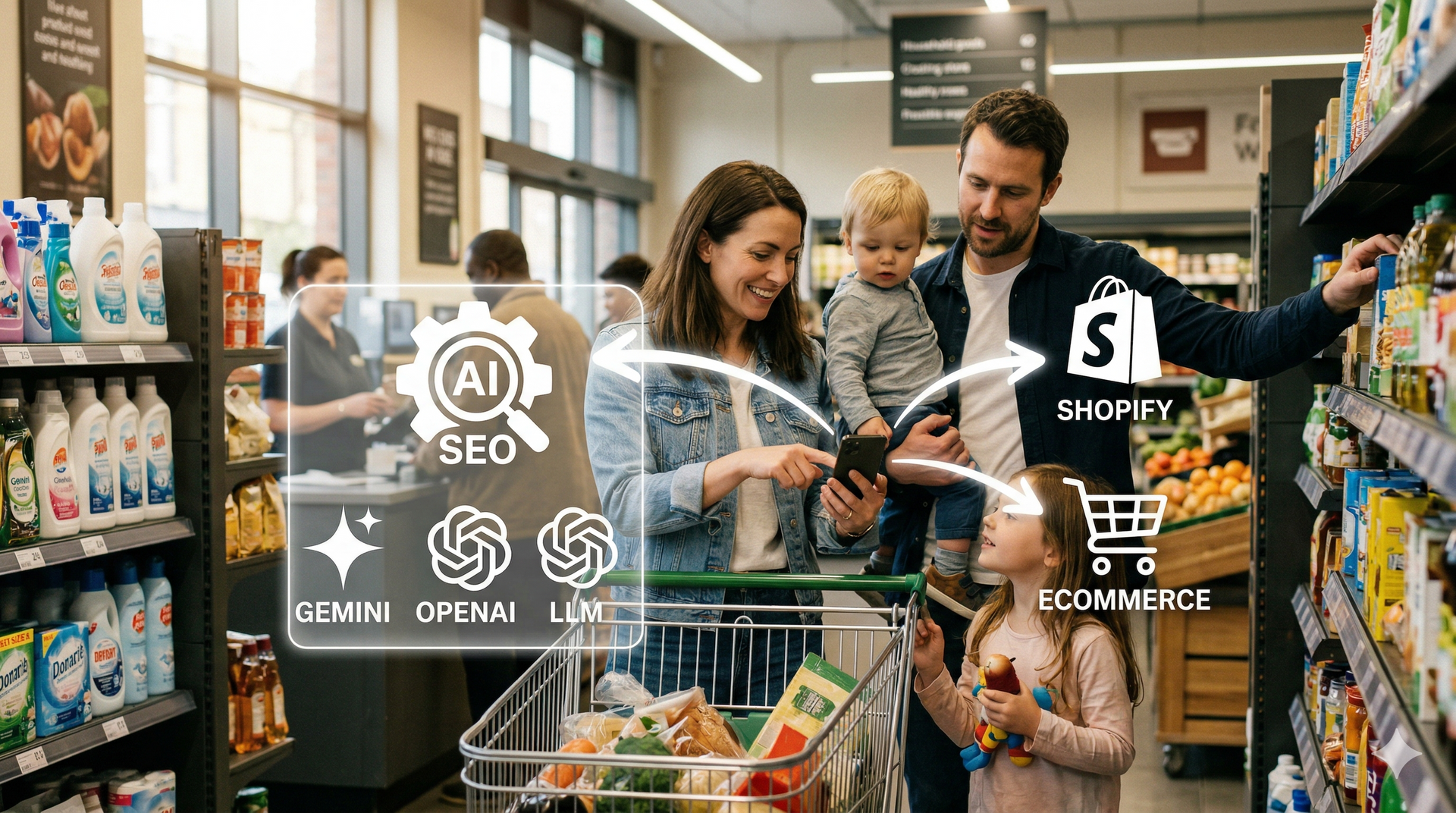
We're seeing it ourselves, and we're seeing it across our clients. Rankings haven't necessarily fallen, yet organic traffic isn't what it used to be. SEO isn't broken. Search has changed. Instead of clicking through websites, people are asking Google AI Overviews, ChatGPT, Gemini, Claude, and Perplexity for answers. In fact, 58% to 68% of Google searches now end without a click, with users getting the information they need directly from AI-generated results.
Because we're actively building AI SEO strategies and monitoring how these platforms retrieve information, we've had a front-row seat to this shift. Businesses can still rank at the top of Google and lose visibility because AI answers the question before anyone clicks through to their website.
That is why Answer Engine Optimization (AEO) has become an essential part of modern SEO. Traditional SEO helps your pages rank. AEO helps AI understand, trust, and retrieve your content when generating answers. Increasingly, success is not just about where you rank. It is about whether AI chooses your business as part of the answer.
In this guide, we'll explain how answer engines work, what they look for when selecting sources, and how you can position your business to stay visible as AI search continues to reshape how customers discover companies online.
What is Answer Engine Optimization (AEO)?
Answer Engine Optimization is the process of structuring and writing your website content so AI-powered engines can easily find, understand, and recommend your business. Traditional SEO focuses on optimizing pages for human searchers using keyword phrases. AEO focuses on optimizing specific pieces of information so machines can synthesize them into direct answers.
An answer engine includes any platform that uses natural language processing or machine learning to answer a query directly, such a ChatGPT, Perplexity, or Google AI Overviews.
Traditional search engines act like librarians that hand a reader a stack of books and tell them where to look. Answer engines act like research assistants that read the books for the user, summarize the relevant points, and deliver the exact conclusion.
The primary business objective of AEO is to secure citations and mentions within these AI-generated responses. When a commercial buyer asks an AI tool for the best logistics providers in Ontario, your goal is to have the engine name your company and link back to your site as the authority.
Learn More About AEO






AEO vs SEO: What's the Difference?
Traditional SEO and AEO are not opposing strategies; they are complementary approaches to visibility. Traditional SEO structures whole documents for search engine bots, while AEO packages precise facts for language models.
| Category | Traditional SEO | Answer Engine Optimization (AEO) |
|---|---|---|
| Goal | Rank pages at the top of search engine results. | Get retrieved and cited in AI-generated answers. |
| Optimization Target | Web pages and keywords. | Answers, entities, and knowledge blocks. |
| Success Metrics | Organic traffic, keyword rankings, and page views. | AI citations, share of voice, and branded search growth. |
| User Behavior | Users browse search results and click multiple websites. | Users consume a summarized answer and may click supporting citations. |
| Content Structure | Long-form pages with introductions, headings, and keyword optimization. | Answer-first content, standalone knowledge blocks, and structured schema. |
| AI Reliance | Low. Primarily relies on search engine crawlers indexing web pages. | High. Relies on LLMs understanding entities, relationships, and trust signals. |
The good news is that AEO doesn't replace traditional SEO. The two strategies work together. A strong SEO foundation helps search engines discover and index your content, while AEO helps AI understand, trust, and retrieve it. Understanding how these approaches complement each other is the key to building a search strategy that's ready for the future.
How AI Search Engines Retrieve Information
Unlike traditional search engines, answer engines don't simply rank web pages. They analyze information from multiple sources, evaluate its credibility, and generate a direct response. While every AI platform has its own methodology, most follow a similar process.
Understanding User Intent
Everything starts with intent. Instead of matching exact keywords, answer engines try to understand what the buyer is actually looking for. If an engineer searches, "Who manufactures custom stainless steel enclosures for food processing?" AI looks for companies that clearly explain their capabilities, industries served, certifications, and manufacturing expertise. Repeating keywords like "custom metal fabrication" isn't enough.
Identifying Entities and Context
Once AI understands the question, it identifies the key entities involved. These include your company, manufacturing processes, materials, products, certifications, equipment, industries, and applications. The clearer your website explains what you manufacture, who you serve, and how your capabilities relate to specific customer needs, the easier it is for AI to determine when your business is relevant.
Verifying Trust and Accuracy
Before recommending a manufacturer, answer engines validate information across multiple trusted sources. They compare your website with business directories, industry associations, certifications, customer reviews, news articles, and other authoritative websites. Consistent business information, documented expertise, and strong third-party signals all increase AI's confidence in your company.
Generating the Best Answer
Once AI understands the buyer's intent, identifies the relevant manufacturing capabilities, and verifies the information, it generates a response using the most trustworthy sources available. This is why detailed capability pages, industry-specific content, case studies, certifications, and clear technical information consistently outperform generic service pages or keyword-stuffed copy.
For most answer engines, the process looks something like this:
Buyer Question → Intent Understanding → Capability Recognition → Trust Validation → AI Answer
The better your website explains what you manufacture, who you serve, and why you're qualified, the more likely AI is to recommend your business when buyers are looking for a manufacturing partner.
Why Answer Engine Optimization Matters for Businesses
Answer Engine Optimization helps your business stay visible where more buying decisions are happening. As AI becomes the first place people look for answers, businesses that are consistently retrieved gain a significant competitive advantage.
- Increase your visibility: AI recommendations put your business in front of potential customers, even when they never click a traditional search result. As zero-click search grows, being part of the answer is becoming just as important as ranking on Google.
- Build trust and authority: When answer engines consistently cite your business, they reinforce your expertise. Because AI validates information across multiple trusted sources, these recommendations carry more credibility than self-promotional marketing.
- Generate better-qualified leads: People who discover your business through AI have often already learned about your capabilities, products, or services. That means they're further along in the buying journey and more likely to convert.
- Reduce long-term marketing costs: A strong AEO strategy helps you generate visibility organically, reducing your reliance on increasingly expensive paid advertising while making your business more resilient to changes in traditional search algorithms.
As AI search continues to evolve, Answer Engine Optimization is becoming a core part of digital marketing rather than an emerging trend. Businesses that invest in clear, trustworthy, and well-structured content today will be better positioned to earn AI recommendations tomorrow. The question is no longer whether your website ranks. It's whether AI chooses your business when your ideal customer asks for a solution.
How AEO Fits Within AI Search Optimization
Answer Engine Optimization (AEO) is one part of a much larger AI search strategy. While AEO focuses on helping your content appear in AI-generated answers, it doesn't work in isolation. Answer engines also evaluate your business identity, website structure, authority, and reputation before deciding whether to retrieve and recommend your content.
Think of AEO as one piece of the puzzle. To maximize your visibility across Google AI Overviews, ChatGPT, Gemini, Claude, Perplexity, and other AI-powered search experiences, it should work alongside several complementary disciplines.
AEO and AI SEO
Think of AI SEO as the umbrella strategy for improving your visibility across AI-powered search experiences. It encompasses everything required to help AI systems understand your business, evaluate your credibility, and recommend your content on platforms like Google AI Overviews, ChatGPT, Gemini, Claude, and Perplexity.
Answer Engine Optimization is one part of that strategy. Its primary focus is helping your content appear in AI-generated answers by making it clear, accurate, and easy for answer engines to retrieve. Think of it this way. AEO helps AI understand a page. AI SEO helps AI understand your business.
Businesses that approach AI SEO holistically are far more likely to earn consistent visibility because they're optimizing not just individual pages, but their entire digital presence. AEO is an essential piece of that strategy, but it delivers the best results when it's supported by strong entities, structured data, topical authority, and trusted brand signals.
AEO and Entity SEO
Entity SEO helps AI understand exactly who your business is and what it should be known for. Rather than treating your website as a collection of pages, AI recognizes your company as a business with specific products, services, expertise, industries, and locations.
For example, if you manufacture custom metal components, Entity SEO helps AI understand that your company specializes in precision machining, serves industries like aerospace and automotive, works with materials such as aluminum and stainless steel, and holds relevant certifications. The more complete and consistent these signals are, the easier it is for answer engines to understand when your business is the right fit for a customer's question.
AEO relies on this understanding. Before AI can retrieve your content as an answer, it first needs confidence that your business has the expertise to answer the question. Strong entity signals provide that confidence, making Entity SEO a critical foundation for successful Answer Engine Optimization.
AEO and Schema SEO
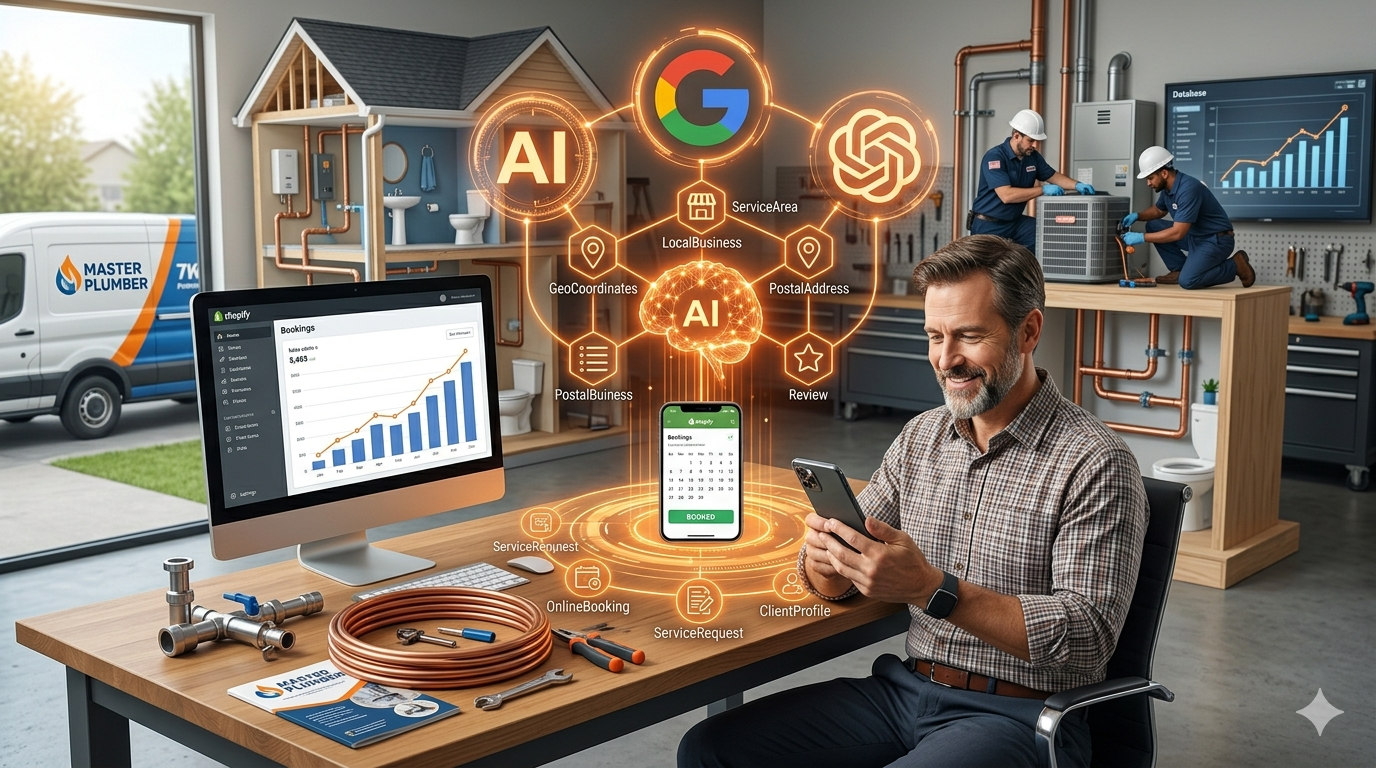
Schema SEO helps answer engines understand your content with greater accuracy. By adding structured data to your website, you provide AI with clear information about your business, products, services, authors, reviews, FAQs, and locations without forcing it to infer that information from your page.
Think of Schema as a translator between your website and AI. While visitors don't see it, answer engines use it to better understand what your content is about and how different pieces of information relate to one another.
Schema alone won't guarantee that AI cites your business, but it removes ambiguity and makes your content easier to interpret, verify, and retrieve. When combined with high-quality content and strong trust signals, it gives Answer Engine Optimization a much stronger foundation.
AEO and Generative Engine Optimization (GEO)
Answer Engine Optimization and Generative Engine Optimization are closely related, but they solve different problems. AEO focuses on helping AI retrieve the best answer to a specific question, while GEO focuses on increasing your brand's visibility across AI-powered search experiences.
| Answer Engine Optimization (AEO) | Generative Engine Optimization (GEO) |
|---|---|
| Optimizes individual answers | Optimizes overall AI visibility |
| Focuses on answering specific questions | Focuses on building brand presence across AI platforms |
| Improves the likelihood of being cited in AI responses | Improves the likelihood of being recommended across a wide range of AI-generated content |
| Relies on answer-first content, structured information, and clear formatting | Relies on topical authority, entity relationships, digital PR, and comprehensive content coverage |
| Success is measured by AI citations and answer visibility | Success is measured by overall AI share of voice and brand visibility |
The two strategies work together. AEO helps answer engines retrieve your content for individual questions, while GEO strengthens your overall authority so AI is more likely to recognize and recommend your business across many different topics and conversations.
AEO and Large Language Model Optimization (LLMO)
Answer Engine Optimization helps AI retrieve your content. Large Language Model Optimization (LLMO) helps AI understand your business.
Think of it this way. If AEO is about creating the best answer to a question, LLMO is about building the reputation that makes AI trust that answer.
LLMO strengthens your brand's authority by building consistent entity signals, publishing original expertise, earning mentions from trusted websites, and reinforcing the topics your business is known for.
The two disciplines work together. AEO helps AI understand what your content says, while LLMO helps AI understand why your business should be trusted.
How Green Lotus Helps Businesses Win with Answer Engine Optimization
At Green Lotus, we believe successful AEO starts long before AI cites your content. Answer engines don't simply retrieve the best-written page. They retrieve businesses they understand, trust, and recognize as authorities. That's why our approach focuses on three core pillars.
1. Help AI Understand Your Business
Before AI can recommend your business, it needs to understand who you are, what you do, and when you're relevant. We create that clarity through Entity SEO, structured data, logical site architecture, and answer-first content. By removing ambiguity, we make it easier for AI platforms to connect your business with the questions your customers are asking.
2. Give AI Reasons to Trust You
Understanding your business is only part of the equation. AI also evaluates whether you're a credible source of information. We help clients build that trust through topical authority, original content, customer reviews, digital PR, industry citations, and consistent business information across the web. The stronger your authority, the more confidence AI has in recommending your business.
3. Become the Answer
Once your business is understood and trusted, the focus shifts to retrieval. We optimize your content for Answer Engine Optimization by creating structured knowledge blocks, strengthening internal linking, expanding topical coverage, and monitoring how platforms like Google AI Overviews and ChatGPT reference your brand. Our goal isn't simply to improve rankings. It's to increase the likelihood that your business becomes the answer customers see first.
This approach delivers measurable results. Visca Electric gained six new Google AI Overview rankings within two months of implementing our AI search strategy, while Neuropotential Clinics earned 23 new AI Overview rankings in a single month. These outcomes demonstrate what's possible when your content is structured for retrieval and backed by real authority.
If your business is preparing for the future of search, AEO should be part of your strategy. The sooner AI can understand, trust, and retrieve your content, the more opportunities you'll have to be recommended when your ideal customers are looking for answers.
How to Measure AEO Success
Traditional SEO focuses on rankings and website traffic. While those metrics still matter, Answer Engine Optimization requires a broader view. The goal is no longer just to earn clicks. It's to become a trusted source that AI platforms consistently retrieve and recommend.
| Metric | What It Measures |
|---|---|
| AI Citations | How often AI platforms cite or reference your content when answering questions. |
| Google AI Overview Visibility | Whether your business appears in Google's AI-generated summaries for relevant searches. |
| Branded Search Growth | Whether more people are searching specifically for your company after discovering it through AI. |
| AI Recommendations | How frequently platforms like ChatGPT, Gemini, Claude, and Perplexity recommend your business. |
| Share of Voice | Your visibility compared to competitors across AI-powered search experiences. |
| Knowledge Panel Visibility | Whether Google recognizes your business as a well-established entity. |
| Qualified Leads | Whether AI visibility is generating more relevant inquiries and sales opportunities. |
| Organic Conversions | Whether your AI and organic search efforts are driving measurable business results. |
The most successful AEO strategies don't optimize for a single metric. They improve visibility, build trust, and generate business outcomes across multiple AI platforms. As answer engines become a larger part of the buying journey, the businesses that consistently earn citations and recommendations will have a significant advantage over those focused solely on traditional rankings.
How AEO Services Prepare Your Business for the Future of Search
Search is no longer just about ranking web pages. It's about becoming the answer. As platforms like Google AI Overviews, ChatGPT, Gemini, Claude, and Perplexity continue to shape how people discover information, businesses that create clear, trustworthy, and answer-focused content will have a significant advantage over those relying solely on traditional SEO.
The good news is that AEO isn't about chasing algorithms. It's about making your expertise easier to understand, verify, and retrieve. Every well-structured page, every original insight, and every strong trust signal increases the likelihood that AI will recommend your business when customers are looking for solutions.
At Green Lotus, we help businesses build that foundation. Our Answer Engine Optimization strategies combine entity optimization, structured data, topical authority, and answer-first content to improve your visibility across today's leading AI platforms. The result isn't just better rankings. It's more opportunities for your business to be cited, recommended, and trusted by AI.
If your website isn't being retrieved by answer engines, you're already missing opportunities to reach potential customers. Book a strategy consultation with Green Lotus to learn how Answer Engine Optimization can help your business stay visible as AI continues to transform search.
Frequently Asked Questions
Does AEO help with Google AI Overviews?
Traditional SEO focuses on moving your website higher in a list of links on a search page. The goal is to get a click. Answer Engine Optimization (AEO) is different because the goal is to have your content extracted and read aloud by a voice assistant or shown in an AI summary box. It is about being the "instant answer." While SEO is about ranking, AEO is about being the definitive source the AI trusts.
How do I optimize my website for ChatGPT and other AI tools?
Start by creating answer-first content, organizing it with clear headings, implementing structured data, strengthening your entity signals, and building topical authority. AI platforms are more likely to retrieve content that is accurate, trustworthy, and easy to understand.
How long does AEO take to work?
Results vary depending on your website's authority, content quality, and competition. Some businesses see improvements in AI visibility within a few months, while building long-term authority across multiple AI platforms is an ongoing process.
What type of content performs best in answer engines?
Content that directly answers customer questions, demonstrates expertise, includes original insights, and is organized with clear headings and structured data performs best. AI favors content that is easy to understand, verify, and retrieve.
How do answer engines decide which sources to trust?
Answer engines evaluate multiple signals, including content quality, entity relationships, structured data, consistency across trusted websites, author expertise, reviews, and overall topical authority. They compare information from multiple sources before deciding what to include in an AI-generated answer.