

What Is Agentic AI for Shopify? A Complete Guide to AI-Powered Ecommerce Automation
Bassem is a digital marketing, SEO, and AI strategist with more than 22+ years of experience managing online marketing strategies for some of Canada's and international corporations, including Canadian Tire, VistaPrint, Remax Canada, Egypt Air, Xplornet, Direct Energy, and Toronto Star.
Key Takeaway: Agentic AI is transforming Shopify from a collection of disconnected tools into an intelligent retail engine. Brands that use AI to capture lost revenue, automate operations, improve AI visibility, and scale customer experiences are building an advantage that manual teams cannot easily replicate. As eCommerce enters the age of autonomous retail, the biggest risk is no longer adopting AI too early. It is waiting too long while competitors pull further ahead.
Managing a Shopify store has never been more difficult. As brands scale in annual revenue, customer expectations continue to rise while traditional operating models struggle to keep up. Support queues grow, communication channels become fragmented, and manual workflows create bottlenecks that slow down growth.
The bigger threat, however, is not complexity but competition. Brands that still rely on human-heavy operations are increasingly competing against businesses powered by AI. That is not a fair fight. AI-driven companies can answer questions instantly, personalize experiences at scale, recover abandoned revenue around the clock, and operate with a level of speed and efficiency that traditional teams cannot match.
At Green Lotus Agency, we have helped generate more than $281 million in sales for our clients. We are seeing a clear shift in the market. Basic email triggers, rigid automation rules, and keyword-based chatbots are becoming obsolete. The winners of the next decade will not be the brands with the largest support teams. They will be the brands with the smartest systems.
The eCommerce industry is entering the age of autonomous retail. Agentic AI is no longer an experimental technology or a nice-to-have feature. It is rapidly becoming a competitive requirement. Brands that embrace AI today can scale customer experience, improve retention, and increase profitability without proportionally increasing headcount. Brands that wait risk finding themselves competing against businesses that are faster, more responsive, and dramatically more efficient.
This guide explains how Shopify Plus merchants can deploy Shopify agentic AI strategically and prepare for a future where AI-powered brands pull further ahead while traditional ecommerce operations fall further behind.
What Is Shopify Agentic AI?
Shopify agentic AI is a new generation of AI that goes beyond answering questions and actively works toward business goals. Unlike traditional chatbots that wait for a human to trigger a workflow, AI agents can understand customer intent, analyze live store data, and take action automatically. They act less like software tools and more like digital employees that continuously help increase revenue, improve customer experience, and reduce operational overhead.
The second AI revolution has already begun. Consumers increasingly expect immediate answers, personalized experiences, and seamless interactions across every channel. Traditional automation systems were built for a different era. Keyword-based chatbots, static email sequences, and rigid workflows assume that customers behave predictably. Real shoppers do not. They switch between channels, ask complex questions, and expect businesses to keep up.
Agentic AI represents a completely different approach. Instead of forcing customers through predefined scripts, AI agents can reason through problems, adapt to changing situations, and work around the clock. In many cases, they can recover abandoned sales, personalize customer interactions, and provide instant support without requiring additional headcount.
The difference between traditional automation and agentic AI is becoming impossible to ignore.
| Operational Feature | Old-Style Chatbots | Agentic AI Systems |
|---|---|---|
| Decision Logic | Rigid IF/THEN rules | Dynamic, context-aware reasoning |
| Data Capability | Basic lookups | Real-time actions and updates |
| Understanding Input | Limited keywords | Natural conversations |
| Memory Retention | Starts over every session | Maintains customer history |
| System Access | One isolated inbox | Coordinates across connected platforms |
This shift has implications far beyond customer support. We believe the future of commerce will increasingly involve AI agents interacting with other AI agents. Consumers will simply tell their personal assistant what they want and trust it to find the best products, compare vendors, and complete transactions. Businesses that are not optimized for this new reality risk becoming invisible.
For Shopify brands, agentic AI is not just another software upgrade. It is becoming a competitive requirement. The brands adopting these systems today are creating the customer expectations of tomorrow. Businesses that continue relying on manual processes and outdated automation may soon find themselves competing against companies that are faster, smarter, and available twenty-four hours a day.
Learn More About Agentic AI

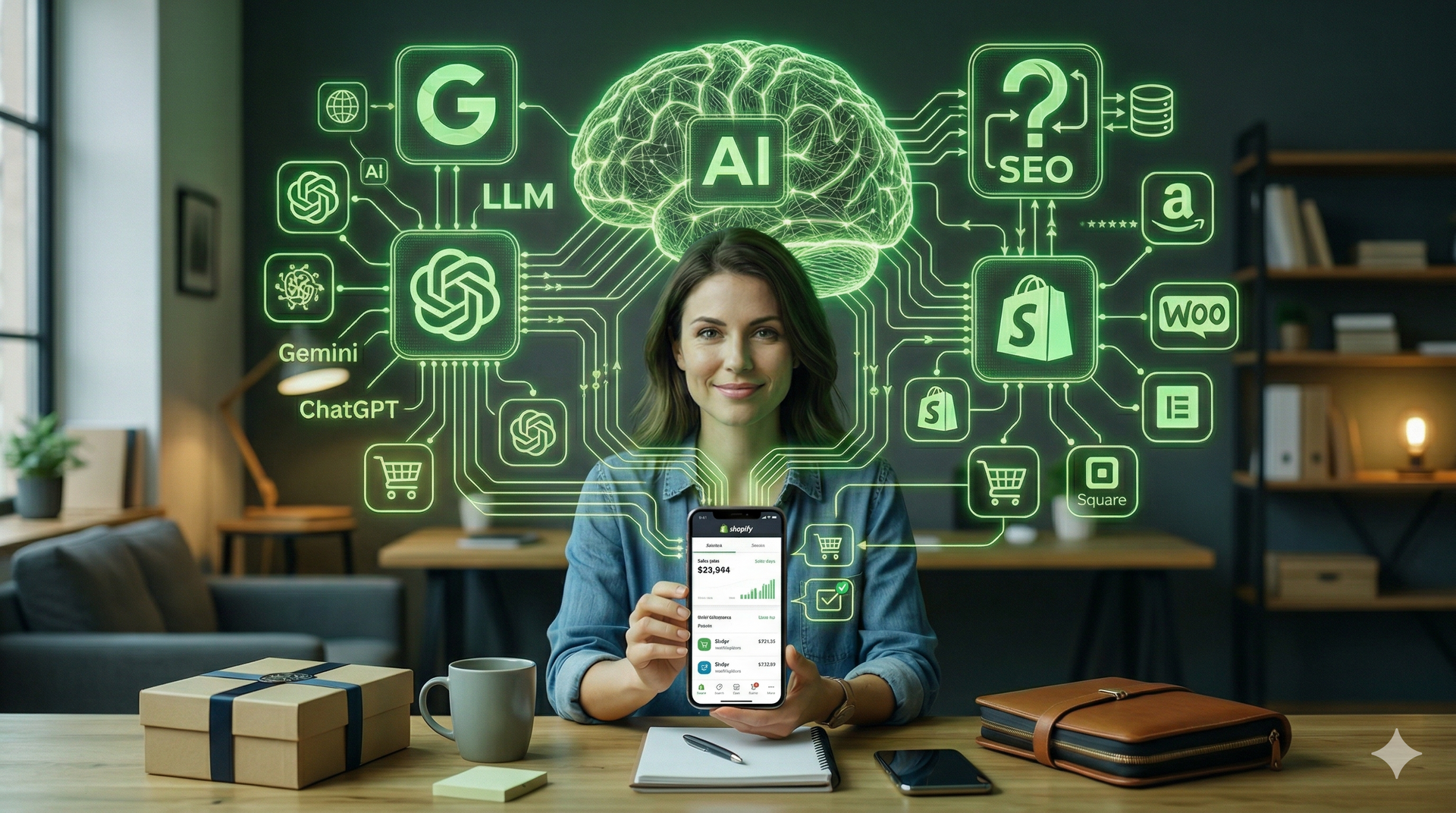


How Agentic AI Keeps Your Shopify Store Under Control
Customer expectations are rising faster than most eCommerce brands can keep up with. Shoppers expect instant answers, personalized experiences, and seamless interactions across every channel. Brands that continue relying on manual workflows and outdated automation will struggle to compete against stores that operate with AI assistance.
Agentic AI allows Shopify businesses to scale customer experience without scaling headcount. Instead of forcing employees to spend hours answering repetitive questions and updating orders manually, AI agents can handle routine interactions around the clock while operating within rules established by the merchant. Human teams remain in control, but they can focus their attention on problems that actually require human judgment.
The biggest advantages of agentic AI include:
- Twenty-four-hour customer support without increasing payroll costs
- Faster response times that prevent abandoned carts and lost sales
- Consistent answers based on your products, policies, and inventory
- Connected conversations across chat, email, SMS, and social media
- Automatic escalation of complex situations to human staff
- Instant order updates and inventory checks without manual work
- More time for employees to focus on sales, retention, and growth
The competitive gap between brands using Shopify agentic AI and traditional stores is widening. Brands that embrace agentic AI are building faster, more efficient customer experiences that shoppers increasingly expect. Businesses that delay adoption may find themselves competing against companies that can serve more customers, respond more quickly, and operate at a fraction of the cost.
The Four Stages of AI-Powered Growth for Shopify Brands
Deploying AI agents successfully requires more than installing a chatbot or adding another app to your tech stack. It requires a systematic approach that helps Shopify brands capture more revenue, automate repetitive work, prepare for the rise of AI-driven discovery, and ultimately scale faster than competitors. This is the framework we use to help Shopify merchants transform AI from a collection of tools into a true growth engine.
- Stage 1: Stop Revenue Leakage: Recover lost revenue by connecting customer conversations, responding instantly across every channel, and using AI agents to reclaim abandoned carts, reactivate dormant customers, and increase Customer Lifetime Value (CLV).
- Stage 2: Automate Operations: Eliminate repetitive work by allowing AI agents to handle shipping inquiries, returns, exchanges, order corrections, and routine support tasks while escalating complex situations to your team.
- Stage 3: Become AI Discoverable: Prepare your store for the next generation of search by optimizing your product data, reviews, and structured content so AI engines and future personal agents can confidently recommend your brand.
- Stage 4: Scale Faster Than Your Competitors: Connect your marketing, sales, support, and operations into one intelligent system that delivers twenty-four-hour customer experiences without scaling headcount at the same pace.
Over time, these stages reinforce one another. Stopping revenue leakage creates immediate gains. Automated operations improve efficiency. Better data and stronger trust signals increase your visibility in AI search. The result is a Shopify store that becomes increasingly difficult for competitors to outrun.
Let's examine each stage in more detail, starting with the revenue opportunities most brands are already paying for but failing to capture.
Stage 1: Stop Revenue Leakage with AI Customer Engagement
Modern consumers expect immediate responses, and the numbers show just how little patience they have left. Research shows that 85% of customers expect a response within five minutes, while SMS maintains a remarkable 98% open rate, with 88% of text messages read within the first three minutes. Yet most Shopify brands still rely on disconnected systems, delayed email sequences, and manual support processes that allow revenue opportunities to slip away.
Most eCommerce businesses do not have a traffic problem. They have a response problem. Buyers jump between Instagram, SMS, website chat, and phone calls while expecting your brand to remember every interaction. Unfortunately, fragmented communication systems force customers to repeat themselves, slow down response times, and create friction that quietly kills conversions. Every missed message, abandoned cart, and delayed reply represents revenue you have already spent hard-earned marketing dollars to acquire.
AI agents solve this problem by creating one continuous customer journey across every touchpoint. Whether a shopper reaches out through your website, social channels, text messages, or phone calls, the system maintains context and delivers consistent responses. Instead of operating separate channels, your brand gains a unified customer memory layer that protects relationships and plugs revenue leaks.
Because the AI agent understands the customer's complete history, it can actively guide the buying journey rather than simply answer support tickets. Real-time cart recovery conversations replace cold, delayed emails. Personalized recommendations increase basket sizes. Automated reactivation campaigns bring dormant customers back without increasing ad spend. The result is a growth engine that improves multiple business metrics simultaneously.
| Business Performance Driver | Primary Metric Affected | How AI Customer Engagement Delivers Results |
|---|---|---|
| Funnel Completion | Store Conversion Rate | Starts real-time cart recovery conversations that resolve objections immediately |
| Order Scale | Average Order Value (AOV) | Recommends complementary products and post-purchase accessories |
| Customer Retention | Customer Lifetime Value (CLV) | Automatically reactivates previous buyers based on purchase patterns |
| Customer Satisfaction | Net Promoter Score / Retention | Delivers faster and more consistent experiences across channels |
| Support Efficiency | Cost Per Ticket / Team Leverage | Eliminates repetitive information lookups and manual entry tasks |
These improvements compound over time. Higher conversion rates create more customers. Better experiences increase repeat purchases. Stronger lifetime value gives you more room to invest in customer acquisition. The end result is a self-reinforcing Shopify growth engine that captures the revenue opportunities your competitors are still leaving behind.
Stage 2: Stop Hiring Humans to Do Robot Work with AI Operations
Your best employees should solve difficult problems. They should not spend their day acting like APIs.
The economics are becoming impossible to ignore. Research shows that 78% of customers choose the first company that responds, while businesses that reply within five minutes are up to 100 times more likely to connect with a lead than those waiting thirty minutes. Meanwhile, the average business misses between 25% and 60% of incoming calls, and 80% of callers will simply move to a competitor if nobody answers.
This creates an uncomfortable reality for growing Shopify brands. Human teams cannot scale infinitely. Hiring more staff to answer the same tracking questions, process the same returns, and fix the same address errors is expensive and inefficient. Competitors using AI agents can provide faster service at a fraction of the cost.
That is why the second stage of AI maturity focuses on operations. Instead of treating AI agents as glorified chatbots, we connect them to your Shopify Admin and fulfillment systems so they can take action instead of simply answering questions. If a customer mistypes an address, the AI updates the order before the warehouse prints the label. If a shipment gets delayed, the AI proactively communicates the issue across text channels. If a customer qualifies for a return under your store policies, the system can generate labels and issue store credits automatically.
| Operational Challenge | Traditional Workflow | AI-Powered Workflow |
|---|---|---|
| Shipping Questions | Support staff manually checks tracking information | AI agents provide real-time updates instantly |
| Address Corrections | Employees edit orders manually | AI updates order details before fulfillment |
| Returns and Exchanges | Staff reviews policies and generates labels | AI applies store rules and processes requests automatically |
| Routine Support Requests | Human teams answer repetitive questions | AI handles common inquiries twenty-four hours a day |
| Complex Situations | Support teams investigate from scratch | AI escalates cases with a complete context summary |
Guardrails keep these workflows safe. Every action is governed by predefined business rules, return windows, warranty policies, and permission levels. If a request falls outside those rules, the system immediately escalates the conversation to a human employee together with a pre-compiled summary of the issue.
This approach allows your team to focus on work that actually requires human judgment. As your order volume increases, AI operations prevent payroll costs from growing at the same pace. The brands embracing this shift are building organizations that scale through automation. Those that continue hiring humans to perform repetitive tasks are competing with businesses that operate faster, leaner, and around the clock. That is not a fair fight.
Stage 3: Become AI Discoverable with Generative Engine Optimization
If AI engines cannot find your store, future customers may never know you exist.
Search is undergoing its biggest transformation since the birth of Google. Between 58% and 60% of searches now end without a click because users increasingly get answers directly from AI summaries and search overviews. At the same time, brands ranking first organically have more than a 50% chance of appearing in Google's AI Overviews.
The implications are enormous. Tomorrow's customers will not necessarily visit your website first. They will ask ChatGPT, Gemini, Copilot, or their personal AI assistant for recommendations. If those systems cannot understand your products or trust your brand, they will recommend your competitors instead.
This is why Generative Engine Optimization (GEO) is becoming a competitive requirement. AI engines do not reward clever keywords or flashy marketing. They reward confidence. They recommend brands they understand, trust, and can verify. If your product data is incomplete, your reviews are weak, or your information is inconsistent, AI systems will simply move on to someone else.
| AI Visibility Driver | Why It Matters | How GEO Strengthens It |
|---|---|---|
| Product Understanding | AI must understand what you sell before it can recommend you | Product schema communicates variants, pricing, and inventory |
| Real-Time Accuracy | AI avoids recommending outdated information | Merchant Center feeds synchronize catalog data |
| Brand Trust | AI evaluates reputation before making recommendations | Automated review generation strengthens credibility |
| Structured Information | Machines prefer organized data over guesswork | Schema markup creates machine-readable context |
| AI Search Visibility | More shoppers are relying on AI answers instead of search results | GEO increases appearances across ChatGPT, Gemini, and AI Overviews |
These signals reinforce one another over time. Better data creates more confidence. More confidence leads to more citations. More citations increase visibility. Greater visibility drives more customers, which creates more reviews and stronger authority.
The brands that embrace this shift will become the default recommendations inside AI search. Everyone else will be fighting for whatever traffic remains. In the age of AI-assisted buying, being invisible to answer engines is no different from being invisible to customers. And invisible businesses do not win.
Stage 4: Scale Faster Than Your Competitors with Autonomous AI Agents
The brands using AI today are creating the customer expectations of tomorrow.
At this stage, eCommerce agentic AI becomes the operating system of your business. Sales, customer service, marketing, and back-office workflows stop functioning as isolated departments and start working together as one continuous retail engine. This is where the gap between AI-powered brands and traditional eCommerce businesses becomes impossible to ignore.
The economics are brutal for companies that fail to adapt. Businesses that rely on manual teams must hire more employees every time order volume increases. AI-powered brands operate differently. They can deliver personalized experiences, support customers twenty-four hours a day, and optimize performance continuously without increasing payroll at the same pace. That is not an incremental advantage. It is a completely different cost structure.
| Competitive Advantage | How Autonomous AI Creates It |
|---|---|
| Twenty-Four-Hour Operations | Voice and text AI agents support customers around the clock |
| Personalized Experiences | Shared memory preserves customer preferences across channels |
| Lower Operating Costs | Growth no longer requires proportional increases in headcount |
| Continuous Optimization | AI identifies bottlenecks and surfaces opportunities automatically |
| Faster Scaling | Teams spend more time on strategy and less on repetitive work |
| Competitive Moats | Better experiences create stronger retention and brand loyalty |
These advantages reinforce one another over time. Better experiences increase customer retention. Higher retention improves lifetime value. Stronger economics allow brands to invest more aggressively in growth, which generates even more data for AI systems to optimize.
Eventually, the difference between AI-powered brands and traditional ecommerce businesses becomes similar to the difference between Amazon and a local retailer. Both are competing for customers, but they are no longer competing with the same tools.
The next generation of eCommerce leaders will not necessarily have the largest teams. They will have the smartest systems. Brands that embrace autonomous AI today are building businesses that become faster, leaner, and more difficult to compete against every year. Everyone else will be trying to catch up.
Building Long-Term Growth with an Agentic AI for Shopify Service
Our team often speaks with Shopify brands that understand AI is changing eCommerce but are unsure where to begin. Deploying a few chatbots or installing disconnected apps is not enough. A successful eCommerce agentic AI strategy requires a complete shift from fragmented workflows to intelligent systems that capture revenue, automate operations, and prepare your business for the rise of AI-driven commerce. As customer expectations continue to evolve and answer engines become the new gatekeepers of product discovery, relying on manual processes and yesterday's automation is becoming an increasingly dangerous bet.
Green Lotus Digital Marketing Agency helps Shopify merchants navigate this transition through our Shopify Agentic AI for Shopify Service. We specialize in building autonomous AI ecosystems that unify customer conversations, recover lost sales, automate repetitive support tasks, and strengthen visibility across emerging AI search platforms. By combining conversational AI, voice agents, backend workflow automation, and Generative Engine Optimization (GEO), we help transform traditional Shopify stores into intelligent retail engines that can scale without a matching increase in payroll.
Let our team evaluate your existing operations, identify hidden revenue leaks, and build your custom AI growth roadmap. Through a comprehensive Agentic AI for Shopify Service, we help brands capture more revenue, improve operational efficiency, and establish a durable competitive advantage in a world where AI-powered businesses are increasingly pulling away from everyone else.
Frequently Asked Questions
Do we need to replace our current tech stack or headless store setup to use AI agents?
No. AI agent frameworks sit directly on top of your existing software setup. Your ERP, CRM, and core checkout engines stay exactly as they are. The AI works as an intelligent connector, checking data and running updates across your current systems using secure API connections.
How do guardrails prevent an AI from giving away free products or bad discounts?
Guardrails are built as fixed rules in the software layer, completely independent of the AI’s creative reasoning. You can set hard transaction caps, limit coupon codes to specific values, and block the AI from altering orders past a certain fulfillment status. If a request breaks a rule, the system stops the action and routes the chat to your team.
Why is a Shopify Basic plan insufficient for advanced AI tools?
Advanced AI agents require deep access to customer data and specific API permissions to process returns, update addresses, and sync details across channels. Shopify restricts access to customer information on lower tiers. You will need to use Shopify Advanced or Shopify Plus to run fully integrated AI operations.
How do we track sales attribution for purchases that happen inside an AI chat?
Every transaction managed by an AI agent passes specific source tags, tracking parameters, and discount data back to your main Shopify Admin panel. This keeps your multi-touch attribution maps accurate, allowing you to see exactly which sales came from SMS, WhatsApp, or website chat tools.