

What Is GEO for Shopify? A Complete Guide on eCommerce Generative Engine Optimization
Bassem is a digital marketing, SEO, and AI strategist with more than 22+ years of experience managing online marketing strategies for some of Canada's and international corporations, including Canadian Tire, VistaPrint, Remax Canada, Egypt Air, Xplornet, Direct Energy, and Toronto Star.
Key Takeaway: Traditional SEO focused on rankings and clicks. Shopify Generative Engine Optimization focuses on making your store's products, data, and expertise trustworthy enough for AI platforms like ChatGPT, Gemini, and Perplexity to cite and recommend them directly to shoppers.
Over the last twenty years, SEO has been a race to the top of Google's search results. The next decade will be different. AI systems are increasingly replacing lists of links with synthesized answers, and in this new environment, rankings matter less than references. For Shopify store owners, the brands that win will not simply rank higher on a page. They will turn their online storefronts into the primary sources that AI engines trust enough to cite. Welcome to the era of Shopify Generative Engine Optimization (GEO).
We are experiencing a massive disruption in consumer discovery that impacts every digital storefront. Leading global technology research firm Gartner projects that traditional search engine query volume will drop by 25%, with market share shifting directly toward conversational AI chatbots and virtual agents. Consumers are rapidly changing how they find information, evaluate brands, and purchase products. According to recent data, 17% of consumers now rely directly on AI summaries to get product or service information, and 16% actively use AI chatbots to search for new products to buy.
When an answer engine handles the research and provides a direct product recommendation right on the user's screen, the traditional path of scrolling through matching e-commerce collection pages collapses. Instead of browsing pages of blue links, consumers are delegating their product research to conversational AI platforms. They are asking ChatGPT for brand recommendations, reading synthesized options in Google AI Overviews, and trusting Perplexity to pick the best items for their specific needs. If your product variations, inventory data, and collection context are not optimized for these backend models, your Shopify storefront runs the risk of fading into absolute invisibility right when a customer is standing by with an open wallet.
What is Shopify Generative Engine Optimization (GEO)?
Shopify Generative Engine Optimization (GEO) is the systematic process of configuring your storefront's technical architecture, product data feeds, and editorial layouts so conversational AI networks natively trust, isolate, and credit your brand inside their text-based summaries.
Traditional search engine optimization focused heavily on cosmetic keyword-to-page matching designed to attract manual user clicks from a directory layout. In 2026, algorithmic systems crawl, parse, and synthesize backend data to generate direct answers instead. Rather than presenting a buyer with a basic directory of web addresses, these modern systems use multi-source aggregation to build a custom solution directly on the results screen.
To survive in this new ecosystem, your storefront must evolve from simple visual design layouts into high-speed, structured databases. When a user delegates a purchase inquiry to an interactive model, the underlying software does not simply look for pages containing exact keywords. Instead, it launches deep data-retrieval sweeps to evaluate factors like technical code hygiene, precise product specifications, and validated customer feedback. If your Shopify data layer lacks explicit machine clarity, automated scrapers cannot confidently verify your catalog details, causing the system to skip your store entirely in favor of a competitor.
Learn More About GEO







Shopify GEO vs. Shopify SEO
To see exactly how traditional SEO contrasts with Generative Engine Optimization, look at how the core operational playbooks differ:
| Strategy Element | Traditional Storefront SEO | Shopify Generative Optimization (GEO) |
|---|---|---|
| The Main Goal | Get your shop listed on Google to get clicks | Get AI tools to name and recommend your products |
| What the Buyer Sees | A list of matching links and store websites | A direct, friendly answer recommending your brand |
| Where Search Happens | Typing terms into a traditional search engine bar | Conversations inside ChatGPT, Gemini, or Perplexity |
| How to Get Cited/Ranked | Repeating exact keywords in product descriptions | Having trusted data, clean code, and great reviews |
In the modern e-commerce landscape, simple ranking positions no longer guarantee revenue. When answer engines control the presentation screen, an uncited business is a non-existent business. Gaining recognition from answer engines as an undisputed source of truth unlocks a major surge in recommendations within generative summaries.
According to platform commerce data, shoppers arriving at storefronts from AI search sessions convert at nearly 50% higher rates and carry 14% higher average order values than traditional organic search. This occurs because AI search collapses the discovery and consideration phases of the shopping journey into a single conversation, delivering pre-qualified buyers straight to your product pages. Securing inline citations transforms your store into an authoritative recommendation, capturing high-intent buyers exactly when they are standing by with an open wallet.
Achieving consistent visibility across this shifting digital landscape requires moving away from isolated, one-off marketing updates. It requires a balanced system that builds deep trust and authority across both traditional search engines and generative answer engines. This outcome is driven by a comprehensive, multi-pillar GEO framework built specifically to secure your citation share and protect your brand's organic reach across the modern web.
How Generative Engines Build Answers (and How To Win GEO)
To get AI tools like ChatGPT, Gemini, and Perplexity to recommend your Shopify store, you need to know exactly how they pick their answers. When a customer asks an AI assistant for a product recommendation, the tool does not just look for websites that repeat the same search words over and over. Instead, it reads through information across the web, blends it together, and writes a direct recommendation right on the user's screen.
AI does not look at your shop the way a human does. It ignores your beautiful design themes and banners, treating your website like a giant folder of raw information. The AI breaks your pages down into small text blocks so it can pull different facts from multiple websites at the same exact time.
Before an AI tool feels safe recommending your brand to a buyer, it acts like an auditor. It compares your store's details against the rest of the internet to see if your claims are true. To build this trust and decide what to recommend, the AI looks for a handful of specific elements across the web:
- Product Specifications: The AI checks the exact details of what you sell, including materials, sizes, and technical features, to make sure it matches what the buyer wants.
- Customer Reviews: The tool looks for real reviews and star ratings on your site and other platforms to ensure your business can be trusted.
- Fresh Information: The AI checks how up-to-date your store is, looking closely at your current pricing and stock levels.
- Brand Reputation: The system looks outside your website to see if other blogs, news sites, and online communities talk about your brand positively.
If the AI cannot easily verify these elements, it will get confused and pass over your shop in favor of a competitor. At the end of the day, AI recommendations are not random. They go to the storefronts that provide clean, honest, and highly organized facts that machines can easily read, trust, and share with a buyer.
This hidden technical barrier is exactly why successful Shopify GEO strategies require a shift away from isolated, one-off marketing updates. To prevent your shop from being skipped by automated systems, you need a complete strategy that builds deep trust and readability across both traditional search engines and AI platforms. This is the multi-pillar Shopify GEO framework we use to help brands organize their information, build real-world authority, and ensure their products get chosen and recommended by answer engines across the modern web.
The Six Pillars of Shopify GEO
Succeeding with Shopify Generative Engine Optimization requires more than publishing a few blog posts or tweaking your product descriptions. It requires a system that helps answer engines understand, trust, and recommend your store. This is the framework we use to help Shopify brands build long-term visibility across Google AI Overviews, ChatGPT, Gemini, Perplexity, and other AI-powered search experiences.
- Entity Authority: Strengthening your brand's official footprint across the web using synchronized structured schema markup, unified business details, and active Merchant Center feeds so machines understand exactly who you are and what you sell.
- Original Insights: Creating highly unique, first-hand data, case studies, and expert opinions that do not exist elsewhere on the web, giving AI engines an undeniable reason to cite your store as the original source.
- Machine-Friendly Structure: Formatting your store information into clear, chunk-level text blocks, clean tables, and lists so that automated AI retrieval systems can seamlessly isolate and extract your facts without getting stuck in tangled code.
- Knowledge Depth: Building comprehensive topical authority around your catalogue with buying guides, deeply detailed product comparisons, and structured educational clusters rather than optimizing isolated keyword pages.
- External Consensus: Cultivating consistent trust signals across independent networks like product reviews, Reddit discussions, YouTube tutorials, and digital PR to verify your business identity and products beyond your own website.
- Citation Share: Moving past traditional position tracking to continuously measure how frequently your products are named, referenced, and recommended inside generative summaries and personalized AI shopping experiences.
Over time, these pillars reinforce one another. Strong technical foundations support better content. Better content strengthens authority. Greater authority increases your visibility across both traditional search engines and answer engines. The result is a Shopify store that becomes increasingly difficult for competitors to displace in AI-generated recommendations.
Let's examine each pillar in more detail, starting with the unique insights that make your shop worth referencing in the first place.
Entity Authority: Becoming a Recognized Brand
AI systems do not simply read your website as an isolated collection of keywords; they organize human knowledge through entities. An entity is an interconnected concept, place, or brand that exists in the real world. Modern answer engines cross-reference your business across the broader web to verify your exact commercial identity before they confidently recommend your products to shoppers. If your business details are messy or disconnected across different channels, AI assistants will lose confidence in your brand and skip your store.
To build deep entity authority, you must ensure that machines understand exactly who you are, what you sell, and where you operate. This means aligning your technical data layer with trusted external indices to help machines place your brand at the absolute center of your commercial niche. We focus on two primary technical mechanisms to establish this baseline machine trust across the web.
Structured Data and Schema Markup
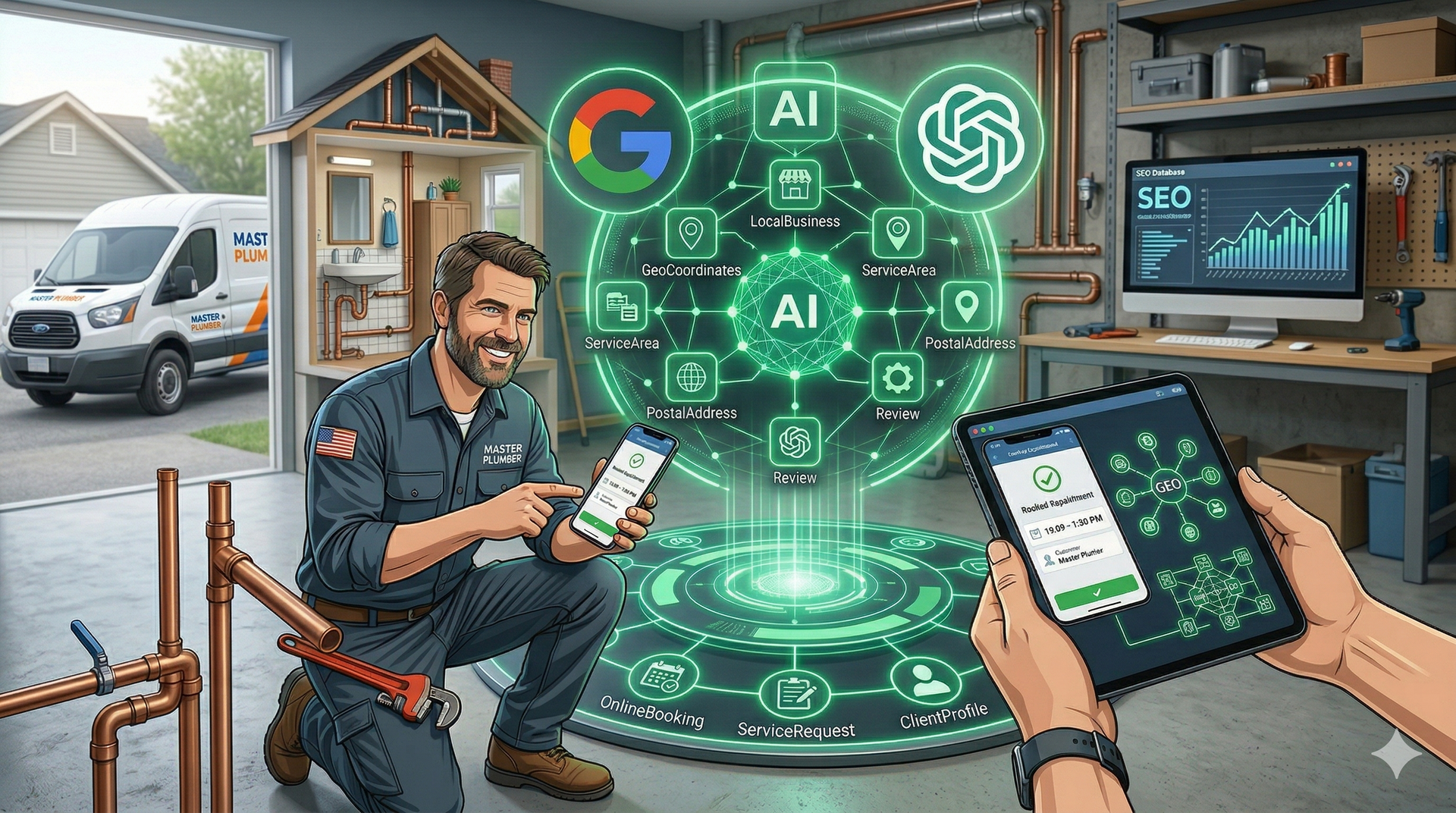
Think of schema markup as a direct translator between your Shopify storefront and AI systems. While human shoppers look at beautiful imagery, layout themes, and color options, machines read organized code data points that remove all guesswork from the indexing process. If an answer engine has to guess what your page is about, it will fail to recommend you. By embedding advanced schema markup directly into your Shopify theme templates, you provide search models with a pristine, machine-readable blueprint of your business operations.
When executing this on your storefront, we focus heavily on three core schema variants to build web consensus:
- Product Schema: This communicates real-time product attributes directly to machine layers. It feeds the AI precise data regarding your pricing tiers, sizes, materials, color variants, and active stock levels, making it simple for an assistant to know if your product fits a buyer's exact prompt.
- Organization Schema: This code explicitly defines your corporate identity, official brand names, social media profiles, and your physical footprint for search bots. For instance, whether you run your company from Toronto, North York, or anywhere else in Ontario, Canada, organization schema allows search platforms to verify your location and regional authority instantly.
- Review Schema: This passes verified, aggregate star ratings and customer feedback directly to machine layers, allowing AI agents to quickly calculate your brand’s trust score without having to crawl unstructured text.
Merchant Center Sync
Connecting your Shopify catalog through automated API feeds to platforms like Google Merchant Center acts as a trusted, real-time data source for AI ecosystems. As AI-powered commerce continues to evolve, these backend product feeds are becoming increasingly vital. Large language models do not just rely on standard web scrapers to find products anymore; they pull data dynamically from verified commercial databases to ensure they aren't recommending outdated information.
When your Shopify store is seamlessly synced with Merchant Center via automated API feeds, it serves as a continuous broadcasting signal for your inventory. Every time you update a price point, add a new variant, or run low on stock, that information is pushed instantly to the merchant index. This real-time synchronization is exactly what AI engines look for during active shopping comparisons. It gives the machine absolute confidence that if it recommends your product to a user with an open wallet, the item will actually be available at the exact price advertised, eliminating the risk of the AI serving a broken or frustrating user experience.
Original Insights: Creating Content Worth Citing
Generic content that simply repeats information already available elsewhere is easy for AI systems to ignore. In the past, storefront content strategies focused heavily on keyword density and word count to trick search engines into ranking a page. Today, answer engines use semantic understanding to filter out unoriginal text. If your Shopify store consists of shallow, copied manufacturer data, AI systems will bypass your business entirely. To capture a high citation share, your e-commerce platform must host unique information that does not already exist on the web.
Crucially, this does not just apply to your blog; it matters immensely on your product and collection pages themselves. Product and collection pages are the heart of your revenue, and if your descriptions lack deep context, answer engines will struggle to match your inventory to specific user requests. Your descriptions must go beyond dry specification sheets to explain who the item is for, what problem it solves, and how it performs in real-world scenarios.
When an AI engine builds a shopping recommendation summary, it looks for real-world proof to back up its answers. By publishing proprietary assets directly within your Shopify product listings and category layouts, you give the AI an undeniable reason to credit your brand as its primary source of truth. This means shifting your content strategy away from shallow text rewrites and toward creating authoritative, data-rich assets that answer engines natively want to reference. You can build this specialized authority by focusing on specific, citable information types directly on your core revenue pages:
| Content Type | Why It Matters for Shopify Stores |
|---|---|
| Case Studies | Demonstrate real-world product results, specialized installations, or project applications. |
| Product Testing | Adds first-hand experience, stress-test logs, and deep utility context that answer engines value. |
| Customer Stories | Provides real-world context, situational success stories, and undeniable proof of actual usage. |
| Industry Surveys | Creates unique data and local market metrics for AI models to use as ground truth. |
| Expert Opinions | Builds deep credibility by showcasing specialized trade insights and professional recommendations. |
| Proprietary Data | Hosts custom specification charts, technical weight capacities, and regional performance records that are impossible to replicate. |
By embedding these original insights directly into your catalog layouts, you address the exact criteria answer engines use to evaluate your niche. This ensures that when a machine crawler scans the web for the absolute best solution, it finds authentic, unmatched data on your product pages that forces it to credit your store.
Machine-Friendly Structure: Making Information Easy to Extract
Great ideas are completely useless if automated web crawlers cannot explore, isolate, and read your data without running into digital roadblocks. Traditional web design prioritizes human visual layouts, often burying important details inside complex script layouts or heavy code execution. If an AI scraper gets stuck trying to process a slow page or messy data layers, it will give up and pull product data from a competitor whose site structure is technically sound. To avoid being skipped, your product and informational pages must be organized into clear data blocks that machines can easily lift and credit.
When we build out e-commerce systems, we actively implement chunk-level content architecture. This practice requires organizing your product details and insights into small, self-contained text modules that can stand completely on their own. Instead of forcing an answer engine to interpret an entire page as a single block of prose, breaking your data down into independent chunks makes it simple for automated systems to isolate precise answers, technical details, and product recommendations. To maximize this extractability, we also feature a Lead Answer Block right at the top of informational layouts. This component is a canonical summary block, usually between 40 and 75 words long, engineered to provide immediate value for both human readers and machine scanners.
To make it even easier for the AI to retrieve your ideas, as well as give your human visitors a welcome visual break from dense text, there are several specific elements you should use across your Shopify catalog:
- Semantic Headings: Structure your text using descriptive headings (## and ###) that directly mirror natural language conversational queries. For example, instead of using a generic header like “Features”, use question-mirroring subheadings that match real intent, such as “What Is the Weight Capacity of This Roof Rack?” or “How Do I Choose the Right Size for Heated Work Gloves?”.
- Structured HTML Tables: Host your product modifications, sizing charts, technical specs, and side-by-side product comparisons in clean tables. AI retrieval models prefer structured data formatting because it allows software to isolate variations in real-time.
- Bulleted and Numbered Lists: Break dense product data and step-by-step instructions down into short lists. Lists improve machine parsing success while allowing human buyers to quickly skim your benefits.
- Interactive FAQs: Build short, dedicated FAQ blocks to address common buying questions and customer objections directly in the code layout where they are most contextually relevant.
Converting messy, unstructured paragraphs into these high-clarity data modules removes the technical friction that causes answer engines to pass over your storefront. When your technical layouts are perfectly optimized for machine extraction, automated systems can confidently pull and recommend your product solutions the moment a buyer asks a question.
Knowledge Depth: Building Expertise Around Your Products
AI systems evaluate broad topics and interconnected themes rather than thousands of isolated, disconnected keywords. If your Shopify storefront looks like an empty grid of product images with basic price tags, answer engines will struggle to understand your true commercial niche. To secure high-value citations, your store must build deep topical authority across your entire catalog. AI assistants look for comprehensive resources that prove your brand truly understands the application, maintenance, and nuances of the items you sell.
To build this dense topical expertise, we move away from optimizing disconnected keyword pages and focus on two primary foundational strategies. This architecture ensures answer engines trust your storefront across every single stage of the modern buyer's discovery journey.
Topic Clusters and Internal Linking
A topic cluster is a structural framework where a single, comprehensive "pillar" page—typically a primary Shopify collection page—is supported by an ecosystem of tightly related educational content. Instead of scattering random blog posts across your site, you organize your supporting resources so they intentionally point back to your main commercial intent.
To make this architecture visible to machine crawlers, we use a rigid internal linking and breadcrumb strategy. Every supporting guide must explicitly link back to the parent category page using natural, contextual text. This clear internal path acts as a visible trail for AI systems. When an answer engine crawls your site, it doesn't just see a standalone product; it sees an interconnected web of expertise, giving the model the confidence it needs to recommend your inventory for complex customer queries.
Educational Resources and Buying Materials
To satisfy the deep semantic parsing used by modern AI engines, you must fill your topic clusters with highly practical, information-rich buying resources. These materials give AI systems the necessary background context to answer shoppers' questions during the research phase.
When expanding the content depth of your Shopify store, we focus on four specific types of educational resources to map out your inventory's full utility:
| Resource Type | Why AI Needs It | What It Gives the Buyer |
|---|---|---|
| Buying Guides | Maps out which product fits specific user needs. | Clear advice to narrow down complex options. |
| Product Comparisons | Helps AI isolate unique features and advantages. | Side-by-side breakdowns of different models. |
| Troubleshooting Guides | Builds problem-solving context machines trust. | Quick answers to setup and technical questions. |
| Maintenance Tips | Creates highly practical, citable text blocks. | Clear steps to extend the product's lifespan. |
By treating your Shopify store as a comprehensive educational hub rather than a basic transactional catalog, you ensure that AI models have access to a rich repository of specialized knowledge. When you provide the structural data, exact specifications, and situational context that these systems crave, your pages transform from simple destinations into authoritative references.
Ultimately, this deep integration of informational resources is what convinces automated answer engines to lift your products out of the database and present them as the definitive solution to an eager buyer.
External Consensus: Building Trust Beyond Your Website
Your website tells your official story, but the broader web acts as an independent witness. Conversational AI models scan the entire digital ecosystem to see if third parties validate your claims. If your Shopify store has zero external footprint, AI tools will lack the statistical confidence to recommend your products.
When compiling recommendations, AI engines put customer reviews and community sentiment front and center. They use advanced sentiment analysis to filter out corporate marketing and prioritize real consumer consensus across two primary categories:
Product Reviews and User-Generated Content (UGC)
A steady stream of verified customer feedback confirms your operational footprint and provides the raw data AI engines use to score your business integrity:
- Verified Reviews: High review volume across your Shopify site and third-party platforms acts as immediate validation. AI indexes review text to understand specific benefits, like sizing accuracy or real-world durability.
- User-Generated Content: Authentic customer photos, unboxing videos, and shared media prove that real people buy your products. AI scrapers cross-reference these cues to confirm your storefront is a legitimate, high-quality operation.
Community Footprint and Digital PR
AI engines crawl open forums, social networks, and media outlets to find un-sponsored, natural recommendations:
- Forum Discussions (Reddit & Quora): Generative engines heavily weigh community threads. When users naturally recommend your products, AI assistants pull your brand into summaries as a trusted, crowdsourced choice.
- Video Platforms (YouTube & TikTok): Tutorials and video demonstrations ensure your brand is cited when engines compile multimedia summaries. AI tools routinely parse video transcripts to answer specific buyer questions.
- Digital PR and Mentions: Earning editorial coverage on independent media sites serves as a massive credibility signal. Consistent brand mentions across directories and news outlets build the verified, real-world trust that AI engines require.
By aligning your off-page presence across these community hubs and review networks, you create an undeniable web consensus that machines simply cannot ignore. When multiple independent sources all point toward your brand as a trusted authority, conversational engines can recommend your catalog with absolute confidence. This external validation completes the trust loop, ensuring that your backend technical data layer is fully backed up by real-world human approval.
Citation Share: Measuring GEO Success
Standard position tracking alone tells you very little about the invisible forces actually influencing how customers discover your products. Chasing traditional rank positions is meaningless if an AI assistant completely answers a buyer's question using a competitor as its referenced source. To judge your storefront's health in the modern landscape, you must track your brand’s actual footprint inside the text models themselves.
We shift our focus away from basic keyword tracking to isolate how frequently your Shopify catalog is pulled into conversational solutions. By monitoring these performance signals, you can clearly measure your return on optimization and adapt as AI models evolve:
| Metric | Why It Matters for Shopify Brands |
|---|---|
| AI Citations | Measures how frequently your brand is cited as an inline source in conversational answers. |
| AI Overview Appearances | Tracks your visibility footprint inside generative search summary text blocks. |
| Branded Searches | Reflects growing consumer awareness as AI assistants prompt buyers to search for your store by name. |
| Share of Voice | Compares your overall mention rate across major generative engines against your direct market competitors. |
| AI Referral Traffic | Identifies the actual volume of high-intent visitors clicking through from platforms like ChatGPT, Perplexity, and Gemini. |
| Conversions | Measures the direct revenue impact driven by pre-qualified, high-intent AI traffic channels. |
By moving your analytics strategy to measure citation share, you gain clear visibility into how effectively your data layer feeds modern answer engines. Instead of guessing why traffic patterns fluctuate, tracking these specialized AI metrics allows you to see exactly when and where your products are being recommended. This continuous feedback loop ensures your Shopify storefront remains deeply optimized, highly citable, and positioned right in front of high-intent buyers exactly when they are ready to purchase.
Building Long-Term AI Visibility with a GEO Agency
Our team often sees Shopify merchants who want to scale but do not know how to handle these rapid algorithmic shifts. A successful Shopify GEO strategy requires more than occasional content updates. As the e-commerce landscape transitions from simple page rankings to AI-driven citations, leaving your storefront's visibility to chance is no longer an option. If your products are hidden behind tangled layers of code or lack authoritative, real-world trust signals, automated answer engines will simply skip your store in favor of competitors who have optimized for machine retrieval.
Green Lotus Digital Marketing Agency helps e-commerce businesses navigate this new frontier by implementing advanced Generative Engine Optimization (GEO), technical data structure alignment, and automated sales optimization strategies. We specialize in transforming standard product catalogs into deeply structured, citable data hubs that large language models naturally trust and recommend. By auditing your existing theme, optimizing your content into clear semantic chunks, and synchronized off-page consensus signals, we ensure your brand captures maximum visibility across ChatGPT, Gemini, Perplexity, and Google AI Overviews.
Let our team audit your digital storefront, clear away technical code friction, and build your custom visibility playbook. Through a comprehensive Shopify Generative Engine Optimization strategy, we help brands capture more citations and strengthen long-term visibility across AI-powered search experiences.
Frequently Asked Questions
What is Shopify Generative Engine Optimization?
Shopify GEO is the specialized practice of structuring your Shopify theme, product data clusters, and off-page footprint so that conversational AI models natively trust, extract, and cite your online store inside generated shopping summaries. It bridges the gap between your standard e-commerce backend and the semantic retrieval systems used by modern AI assistants.
Does GEO replace traditional Shopify SEO?
No, it enhances your existing Shopify SEO efforts rather than replacing them. Traditional SEO focuses on optimizing collection page layouts and product titles for keyword search ranks. GEO builds upon this baseline by requiring deep technical theme health, explicit JSON-LD schema structuring, and off-page authority signals to ensure your content is easily digestible for machine scrapers.
How is Shopify GEO different from Answer Engine Optimization (AEO)?
While both concepts are vital for modern visibility, they target different user behaviors. AEO focuses entirely on extraction—formatting quick text blocks, direct lists, and quick Q&As so voice search assistants can read out your text. Shopify GEO focuses heavily on citation—building deep pillar collection resources, unique product test data, and broad entity authority so that complex models credit your specific store inside their final synthesized responses.
Why are AI citations important for Shopify conversion rates?
Describe the item or answer the question so that site visitors who are interested get more information. You can emphasize this text with bullets, italics or bold, and add links.
Can smaller Shopify stores compete with massive marketplaces like Amazon?
Yes. AI systems are not designed to reward corporate scale alone; they reward data clarity, specialized authority, and deep contextual trust. A nimble, well-optimized niche Shopify storefront with highly structured product pages, active review feeds, and helpful educational collections can easily out-cite a massive marketplace whose data is buried in bloated script layouts.
How long does it take to see GEO results on a Shopify store?
Timeline variations depend heavily on your theme's technical health, but you can see meaningful shifts relatively quickly by targeting specific, long-tail consumer questions. For example, we applied these high-clarity structuring principles to a local service client, Visca Electric. After transitioning them to a highly optimized site, they achieved a 447% increase in first-page rankings within a year, and they secured 6 new keyword placements specifically inside Google AI Overviews in just two months.
Does schema markup matter for Shopify GEO?
Yes, advanced JSON-LD schema markup is absolutely essential for modern Shopify stores. Standard web scraping can misinterpret variant options or localized pricing. Schema markup removes all guesswork from the indexing process, ensuring that AI tools, shopping assistants, and answer engines read your exact inventory status, Canadian dollar pricing, and aggregate customer reviews with absolute accuracy.