
Google: 87% Keep Shopping After Christmas. Is Your Shopify Store Ready?
Bassem is a 2-time winner of the Canadian Entrepreneur of the Year award and a digital marketing, SEO, and AI strategist with 22+ years of experience managing online marketing strategies for some of Canada's largest companies and international brands, including Canadian Tire, VistaPrint, Remax Canada, Xplornet, Direct Energy, and Toronto Star.
Key Takeaway:
The biggest AI risk isn’t missing the technology. It’s waiting until the competitive gap shows up in your numbers, when catching up may already be too late.
Every December 25, store owners go on vacation, but customers don’t.
Google just published research that proves it. In October 2026, Think with Google released findings from a [Google-commissioned Ipsos Holiday Shopping Study](LINK NEEDED) covering the 2025 season. 87% of U.S. shoppers made a purchase on post-holiday shopping occasions. High-confidence purchases hit a season high of 50%, and impulse buys dropped to 24% of reported post-holiday purchases. Google calls this window “Q5,” and it runs from December 26 into early January.
Google is right about the buyers. But I don’t think this is about your ad budget. It’s about who’s minding the store. Your ads can run while you’re away. Your product pages and customer questions can’t take care of themselves. If nobody’s home, more ads just send more people to a closed door.
The 70% Should Be Terrified of the 30%
Being part of the majority feels safe. If most businesses haven't fundamentally changed how they operate around AI, it's easy to assume you still have time. Your competitors are experimenting too, nobody has completely figured this out, and you can always move when the technology becomes clearer.
The 30% don't need to have AI completely figured out. They just need to learn faster than everyone else. Every workflow they automate, bottleneck they eliminate, and customer interaction they improve creates another small advantage. Those advantages don't stay small when you multiply them across an entire business.
One company responds in seconds while another responds tomorrow. One launches in days while another takes weeks. One handles growth without adding headcount at the same rate while another watches payroll climb with revenue.
At first, these differences look like efficiency gains. Eventually, they create two companies with completely different economics.
And that's when the 70% have a serious problem.
Autopilot Only Works If Your Product Pages Can Fly Themselves
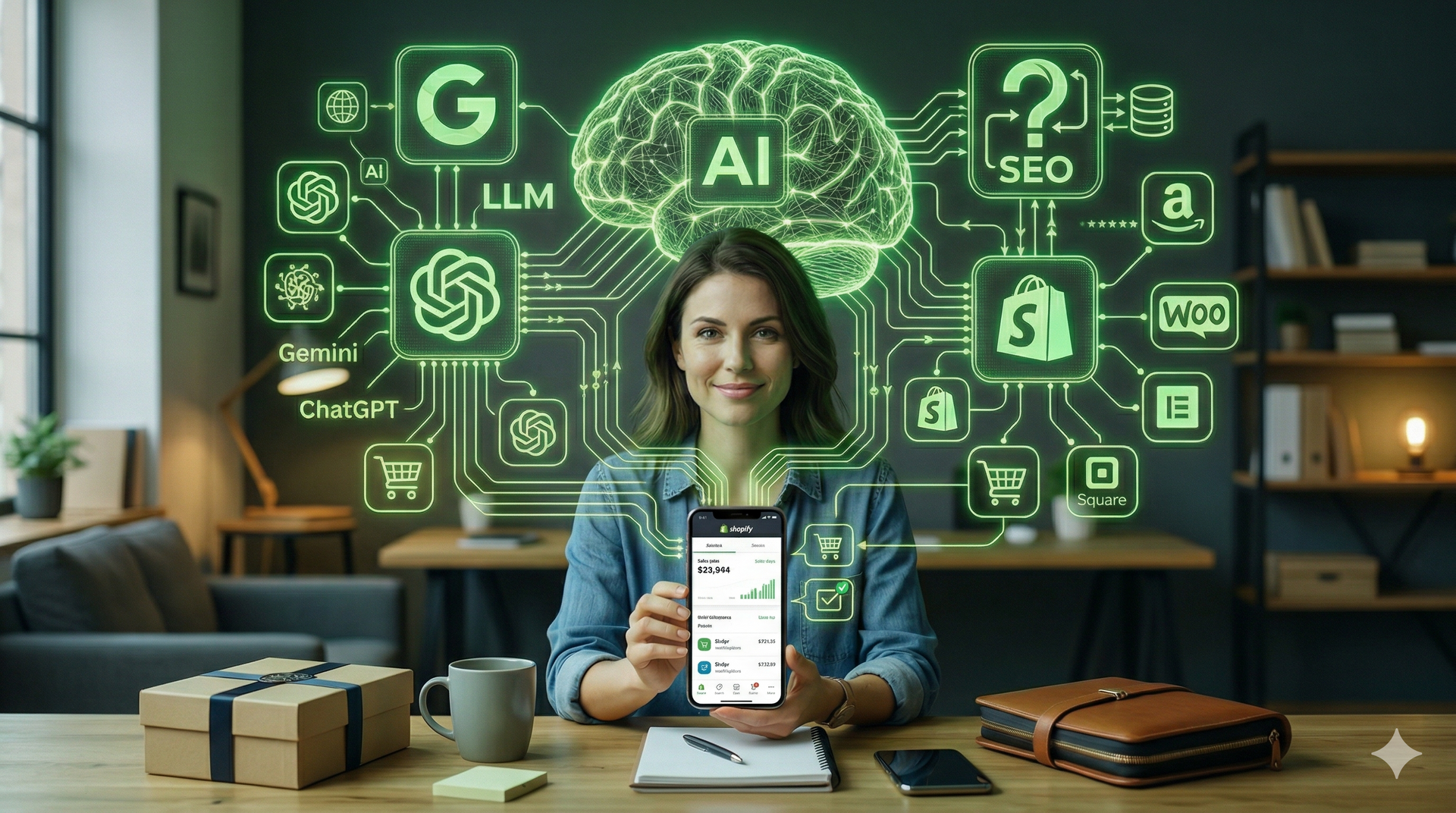
Thin specs, vague sizing and return policies buried in the footer make products hard for AI to recommend. When AI is helping someone avoid a return, it favors the product it can explain with confidence.
Google’s own advice points the same way: “Feed complete product specifications, sizing details, and comparison data into your merchant feeds so Search and AI tools can surface accurate answers.” Your merchant feed is the product information your Shopify store sends to Google.
This is why I call Shopify the gold standard for ecommerce. Its clean product structure, built-in schema and Google product feed give you a real head start. But Shopify gives you the structure. It doesn’t write your answers.
The fix is good Shopify SEO, and it has to happen before December 26. For each of your best-selling products, check:
- Specs: materials, dimensions and compatibility written in the description, not only shown in images.
- Sizing: a size chart on the product page, plus plain fit notes like “runs small.”
- Comparisons: how this product differs from similar ones you sell.
- Delivery and pickup: post-holiday shipping times and store hours, updated for the season.
- Returns: a short summary of your return policy on the product page, including any holiday return window.
Do that, and your product pages keep selling while your team is offline.
The Store That Answers at 11 PM on December 27 Wins
Picture a shopper with a gift card and a sizing question at 11 PM on December 27. She’s ready to buy, but she needs one answer first. If nobody responds, that confidence goes to a competitor. Confident buyers don’t wait until January 5.
Ads can bring that buyer to your store. They can’t answer her question.
That’s where the Green Lotus AI Team comes in. It answers product questions instantly, at any hour, using your Shopify product data. It can also reply to reviews, and follow up on abandoned checkouts once customer consent is set up for your store.
What I’d Set Up Before December 26
Google says keep budgets funded through Q5, and I agree the window is real. But if every competitor keeps bidding, you pay more for the same buyer. And if nobody’s minding the store, you’re paying to send buyers somewhere nobody answers.
If I ran a Shopify store today, here’s the order I’d follow:
Green Lotus AI Team
- Syncs with your Shopify product data to answer product questions instantly.
- Order lookups and consent are set up for each store.
- Shopify Basic stores may share less data, so we confirm what your store supports first.
Product Pages
- Answer buyers' questions without you using the checklist above.
AI SEO
- Products have the best chance of showing up in Google AI Mode, AI Overviews, and ChatGPT while offline.
- We track visibility every month.
- We don't promise it.
Paid Ads
- Only then turn up paid ads.
- Ads stop working the day you stop paying.
- Product pages AI can understand keep working through Q5 and long after it.
- Reverse the order and you're paying for traffic to an empty store.
For Canadian Med Health Supplies, a Canadian Shopify client, the Green Lotus AI Team handled 87 conversations in a 60-day test.
Want to know if your store is ready for Q5? Text us or start a chat.
LinkedIn Thought Leadership
Every December 25, store owners go on vacation. Customers don’t.
Google’s new research says 87% of U.S. shoppers keep buying after Christmas. Half of those purchases are made with high confidence, a season high.
Most Shopify stores will be on autopilot that week.
Google says keep your ads running. I think that misses the bigger problem.
Full article in the comments.